


-Neha Basudkar Ghate
In 2025, India’s tooling, die, and mould industry has proved it’s a powerhouse driving the nation’s manufacturing ambitions. From electric vehicles to medical devices, rising demand and advanced innovations are reshaping the way tools are designed and made. With digital integration, advanced materials, and smart automation, the sector is gearing up for a future where precision meets global competitiveness.
As India charts its course towards a US$1-trillion manufacturing economy by 2030, the tooling, die and mould industry has firmly positioned itself as a critical enabler of this transformation. In 2025, the sector’s momentum was fuelled by surging demand from electric vehicles, consumer durables, medical devices, aerospace & defence, and packaging segments that increasingly rely on precision tooling to meet global standards. Aggressive localisation initiatives and a rebound in exports further underscored the industry’s growing strategic importance.
The year will also be remembered as one of consolidation after the turbulence of the post pandemic years. The sharp rise in domestic demand for high precision dies and moulds, supported by Production Linked Incentive (PLI) schemes in automobiles, white goods, and electronics, reinforced this stability. Together, these developments restored the momentum and paved the way for accelerated growth in the years ahead.
Innovations in Tool Rooms Define 2025
In a year marked by resilient growth amid global economic fluctuations, the tooling, die and mould industry solidified its role as a cornerstone of India’s manufacturing ecosystem. The industry, encompassing precision tools, dies for casting and forming, and intricate moulds, navigated supply chain disruptions, embraced digital transformations, and capitalised on surging demand from automotive, aerospace, and consumer electronics.
Industry events has enhanced this vibrancy. For instance, the International Tooling Summit hosted by TAGMA India inspired collaborations that materialised into joint ventures for hybrid tooling solutions.
Yet, challenges persisted. “One of the foremost challenges has been the shortage of skilled manpower in tool design. Designers are increasingly gravitating towards product design roles, which makes retaining dedicated tool designers a pressing concern for companies like ours,” said Abhijeet Raut, Director, Abhijeet Dies & Tools Pvt. Ltd.
“Another major hurdle is the lack of digitisation across Indian tool rooms. Compared to global standards, many facilities are still reliant on traditional, manual processes. Closely linked to this is the limited adoption of automation in tool rooms. Finally, there is a gap in specialised educational courses for tool rooms, particularly in western India,” he elaborated.
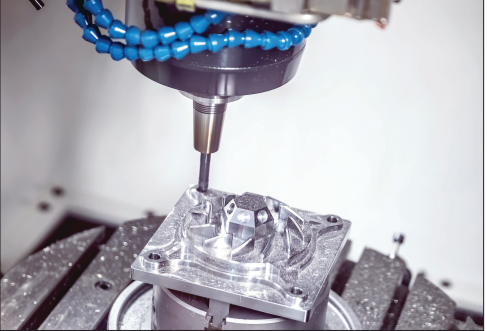
Despite the bottlenecks, 2025 has been a year of significant technological progress. Providing further insight, Raut noted: “In Indian tool rooms, advancements in CNC technology have significantly enhanced precision, reduced rejection rates, minimised rework, and shortened machining cycle times. Multi-axis tooling has also enabled the creation of more complex geometries without the need for secondary processes such as EDM.” As a result, toolmakers can now produce more complex parts or tools using fewer stages in the manufacturing process.
The integration of AI and Industry 4.0 features has been instrumental in this progress too. “With IoT connectivity and real-time data analysis, tool rooms can now benefit from remote monitoring and troubleshooting,” said Raut.
GST Reform 2.0: A Boost for Manufacturing and Tooling
Alongside industry consolidation, 2025 also witnessed a decisive policy shift with the Government of India’s GST Reform 2.0 announced in September. By streamlining tax slabs, simplifying compliance, and accelerating refunds, the reform injected fresh liquidity into manufacturing and consumer markets.
While the GST rate for tooling remained at 18%, the indirect benefits were substantial. Lower levies on automobiles, packaging, and engineering inputs expanded the demand for dies and moulds, while improved compliance processes strengthened cash flows for toolmakers. Industry leaders welcomed the overhaul as a step towards predictable taxation and easier business operations, reinforcing the sector’s resilience and setting the stage for stronger domestic demand in 2026.
Emerging Materials in 2025
The year has also witnessed the rise of emerging materials, such as PEEK, LCP, advanced composites and medical-grade LSR, reshaping mould design by demanding higher thermal stability, tighter tolerances and improved wear resistance. Their adoption in sectors such as electric vehicles, consumer appliances and medical devices has pushed toolmakers to develop advanced mould architectures capable of handling complex geometries and micron-level precision, while also integrating technologies such as multi-axis machining, hybrid tooling and flow simulation to meet rising performance expectations.
Advanced polymers and composites have reshaped the way toolmakers approach mould architecture. Subin Vadakkiniyil, Co-Founder & Director Business Development, Helli Moulds, observed: “Emerging materials such as high-performance polymers, composites, PEEK, LCP and medical grade LSR significantly influenced mould design in 2025 by pushing toolmakers to achieve higher thermal stability, tighter tolerances and better wear resistance. These materials require advanced mould architectures capable of handling complex geometries and micron-level precision, particularly for EV components, toys and consumer appliances.”
“In 2025, closed-loop AI-driven process optimisation systems enabled real-time control over key moulding parameters such as pressure, temperature and clamp force, helping achieve consistent micron-level tolerances across production batches,” added Vadakkiniyil.
Digital Machines and Smart Materials
According to a Future Market Insights report on ‘Injection Molding Machines Industry Analysis in India’, the injection moulding machine market in India is “projected to grow from USD 830.9 million in 2025 to USD 1,759.5 million by 2035”. This shift is driven by the need for energy efficiency, repeatability, and precision, particularly in automotive, consumer goods, and healthcare sectors.
Vadakkiniyil elaborated: “The increased adoption of electric injection moulding machines, coupled with servo-driven controls and predictive maintenance protocols, has further improved energy efficiency, repeatability and production reliability. Integration of 3D printing for prototyping, hybrid tooling and advanced flow simulation software also played a key role in reducing design iterations, minimising defects and supporting recyclable materials and energy-efficient manufacturing practices.”
Industry 4.0 & Workforce Transformation
The sector’s digital transformation is increasingly defined by predictive capabilities rather than reactive fixes. Vadakkiniyil noted, “Industry 4.0 integration is expected to shift mould manufacturing from reactive to predictive operations. IoT-enabled sensors continuously capture machine and mould parameters such as vibration, temperature, pressure and hydraulic performance.”
“AI-powered predictive algorithms can analyse this data to forecast equipment failures in advance, reducing unplanned downtime by up to 40–50% and optimising maintenance scheduling without disrupting production cycles,” he added.
However, “to sustain innovation and competitiveness, mould manufacturers must focus on transforming their workforce alongside technological advancements”, emphasised Vadakkiniyil.
“The industry is witnessing a critical skill gap, especially with a large portion of experienced technicians nearing retirement and newer technologies demanding multi-disciplinary expertise. Targeted upskilling in Industry 4.0 areas such as AI-driven process optimisation, IoT-based monitoring, hybrid machining and automation maintenance is becoming essential. Manufacturers are strengthening in-house training academies and collaborating with technical institutes to build job-ready talent in CNC programming, digital simulation and robotics,” added Vadakkiniyil.
Setting the Stage for 2026
By late 2025, Indian tool rooms began to move decisively from conventional operations towards predictive, digitally integrated workflows. A Research and Markets report on ‘Dies and Molds Market in India’ highlights that the dies and moulds market in India is expected to grow by USD 2.84 billion between 2024 and 2029, driven by simulation technologies, automation, and advanced materials. This transformation is particularly evident in the automotive and consumer goods sectors, where rapid design changes demand shorter turnaround times and higher precision.
This shift reflects a broader transformation in Indian tool rooms, where digitalisation and automation are no longer optional but essential. The integration of smart sensors, predictive analytics, and rapid turnaround practices is positioning the industry to meet global expectations of precision, speed, and reliability. “Customisation and rapid turnaround have become essential in sectors like electric vehicles and advanced consumer goods, where product designs evolve continuously,” said Vadakkiniyil, emphasising that this is exactly why predictive analytics and digital integration are now central to competitiveness.
Automation & Hybrid Manufacturing Momentum
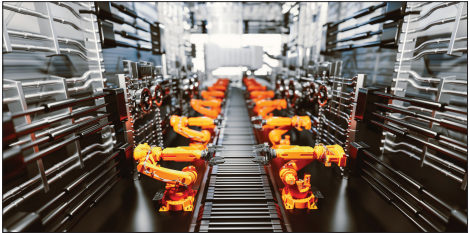
Shijesh Kokkodan, Director, MacPro Technologies Pvt. Ltd., described 2025 as a year of automation breakthroughs. “In 2025, the manufacturing sector faced a widening skill gap between institutes and industry, prompting us to establish internal training centres to upskill our workforce and address this core challenge. We shifted to automation, implementing unmanned machine operations during night shifts for consistent precision in injection moulding and stamping dies, reducing manpower needs while enhancing productivity. Digitised tools, including ERP systems integrated from project management to delivery, revolutionised error detection and popping up issues instantly for swift resolutions, unlike manual methods that lacked accuracy. This led to significant productivity gains, lower rejections, and data driven improvements through cross functional teams.”
Beyond automation, the industry’s technological strides extended into quality and durability enhancements. Kokkodan observed, “Industry 4.0 technologies like real-time inspections and process monitoring elevated part quality and scalability.” He further highlighted how “advancements in heat treatments like vacuum, sub-zero, cryogenic and PVD coatings, tailored to tool steel and plastic materials, boosted mould durability. Multi-cavity tooling, optimised via mould flow analysis and customer collaborations on product design, cut cycle times through superior cooling”.
2026 Outlook: Advanced Moulding Technologies on the Horizon
Looking ahead, the Indian dies and moulds market is forecast to grow. Much of this growth will be driven by next-generation moulding technologies such as multi shot injection moulding, in mould decoration, and lightweight processes like MuCell foaming. These innovations are increasingly demanded in automotive interiors, consumer electronics, and smart surfaces, where design complexity and functional integration are paramount.
Raut said, “Emerging technologies are reshaping die and mould manufacturing in 2026. This shift is being driven by rising demand for 2K–3K moulds across various part categories, Moulded-In-Colour (MIC) technology as a replacement for paint processes, In-Mould Decoration (IMD) for applications such as ambient lighting and smart/functional surfaces, and advanced processes like Core Back and MuCell injection.”
Vadakkiniyil continued, “In 2026, the next phase of mould manufacturing will be driven by deeper integration of digital manufacturing, automation and intelligent process control.” He sees hybrid additive subtractive manufacturing as a game changer, “enabling advanced mould inserts with optimised cooling channels and enhanced structural efficiency, improving cycle times and thermal performance”.
Vadakkiniyil also pointed to the role of intelligent systems in raising shop floor consistency. “AI-powered defect prediction, closed-loop quality control systems and robotics and vision-based quality inspection will increase consistency, reduce human dependency and improve shop floor productivity,” he explained.
And, with servo-driven injection moulding machines becoming mainstream, he believes efficiency will reach new heights. “The increased adoption of electric servo-driven injection moulding machines, combined with fast changeover practices like SMED and standardised digital process libraries, will significantly reduce downtime, improve process stability and deliver consistent micron-level tolerances across complex, high-volume moulding programs,” added Vadakkiniyil.
At the same time, rising customer expectations are set to influence these technological shifts. Raut emphasised, “Customer expectations around tool durability have risen sharply. Many clients, particularly in the two wheeler segment, now demand tool life cycles exceeding one million shots. Meeting such requirements necessitates the introduction of advanced coatings that can significantly extend tool life and performance.”
Meanwhile, Kokkodan noted that the industry is on the cusp of broader adoption of conformal cooling, with affordable 3D-printed inserts. “We anticipate broader adoption of conformal cooling via affordable 3D-printed inserts, enabling 20–30% more tools with substantial cycle time reductions, especially in multi cavity setups. Two shot (2K) and three shot (3K) injection moulding will expand into automotive and electronics, localising complex moulds previously imported from Europe and China,” he said.
Kokkodan also pointed to stamping innovations. “High speed stamping dies will incorporate in die laser welding and riveting at 100–200 strokes per minute, slashing customer cycle times,” he observed. “Emerging demands in electronics, aerospace and defence for ultra precise tooling align with our infrastructure, driving further growth and value addition,” added Kokkodan.
Images used for representation only.
Courtesy Envato Elements.
This article was published in TAGMA Times

COMMENTS