

The electronics sector presents huge opportunities for toolmakers. However, to reap all that the sector has to offer, toolmakers need to scale up quickly. “Entering the electronics industry requires a complete shift in mindset, investment in precision equipment, and continuous training of people. With these changes, tool rooms can align themselves to meet the sector’s demanding requirements and position themselves for new opportunities,” says Stephen Babu, Vice President – Business Development, SFO Technologies, during an insightful interaction with Nishant Kashyap.
Q. How would you describe the current state of India’s electronics and semiconductor industry, especially with government initiatives like PLI schemes and the Indian Semiconductor Mission?
India’s electronics industry is growing at an exceptional pace. Once primarily a major consumer of electronic goods, we are now among the world’s largest manufacturers. In 2024–25, the industry reached around USD 52 billion, and over the next four years, it is expected to more than double, crossing USD 100 billion. This translates to an annual growth rate of 18–20%, which is remarkable.
This growth is driven largely by domestic consumer electronics, supported by exports and the entry of global players such as Apple, which has begun manufacturing iPhones in India. The demand is also rising in automotive electronics, as vehicles increasingly integrate advanced electronic systems.
Government initiatives such as the PLI schemes and the Indian Semiconductor Mission (ISM) have played a crucial role in attracting billions of dollars in investments from both private companies and public-private partnerships. Together, these efforts are building a strong ecosystem that positions India as a significant force in the global electronics industry.
Q. With India’s electronics and semiconductor industry set to double in size over the next four years, do you think that the domestic supply chain from tooling and injection moulding to steel, metals, and skilled manufacturing is prepared to support this growth?
I would say that we are not fully prepared, but we are definitely progressing. The pace is slower than what the industry ideally requires, but we are making steady, incremental steps. Certain sectors are already well-developed and actively supporting the electronics ecosystem, while others still need to mature and catch up to the required speed. Overall, the supply chain is evolving, though it remains a work in progress.
Q. Within the rapidly growing electronics industry, what kind of opportunities do you see emerging for toolmakers, especially given their traditional focus on automotive and other sectors?
Toolmaking is the backbone of any industry, whether aerospace, medical, automotive, or electronics. In electronics, the demand is particularly strong because of box-build requirements, which involve press tools, plastic injection moulds, dies, die-casting, fixtures, and jigs. This creates significant opportunities for toolmakers.
To put it simply, when you build a temple, you will find shops selling flowers and food emerging around it. Similarly, as the electronics industry in India grows, the tooling industry must expand alongside. The domestic demand for consumer electronics, including mobile phones, smart devices, and medical equipment, is rising sharply. The aerospace and automotive sectors continue to grow as well, though automotive toolmaking in India is already more mature compared to electronics.
Overall, the electronics sector presents huge requirements for tooling; the industry needs to scale up quickly to meet this demand.
Q. What should the tooling community do to enhance its capabilities in skill development? How can companies like yours, along with government bodies and toolmakers, collaborate to strengthen the ecosystem?
Training and upskilling are absolutely critical. Unfortunately, many small and medium-scale industries neglect this area. They hire engineers or managers and continue with them at the same level, without scaling their skills to meet global standards.
While some OEMs and large MNCs conduct training as part of their global programs, what we truly need is focused training on the latest technologies, advanced machinery, and best practices available in the market. This requires serious investment. In fact, after machinery and equipment, the biggest investment should be in people, not just hiring them, but continuously training them.
Associations like TAGMA and institutions such as NTTF are already contributing by conducting industry-focused training programs. Expanding such initiatives and encouraging more participation will be vital. Ultimately, building a skilled workforce is the foundation for enhancing the overall capability of the tooling industry.
Q. Having worked extensively with Chinese toolmakers, what do you think differentiates them? What are they doing particularly well as a tooling community?
China’s electronics industry began its transformation nearly 20–25 years ago, when global MNCs moved operations there, attracted by low labour costs, favourable government policies, cheap land, and strong procedural support. This influx of investment triggered a boom in electronics manufacturing, and the tooling industry grew alongside, with investors from Singapore and Taiwan also contributing.
In the early days, Chinese moulds and press tools were often perceived as second-rate, with doubts about their durability. But today they supply to global leaders such as Apple, BMW, and major Japanese companies, which is a testament to how much they have advanced. This progress has been driven by a focused approach from both the government and the private industry.
Over time, China built a robust ecosystem through a tough learning curve. Their supply chain for tooling is now highly developed; access to steel, spare parts and components is seamless, reducing delays and inefficiencies. Collaboration is another hallmark. In hubs like Shenzhen, Xiamen, and Chengdu, toolmakers specialise in specific stages. For instance, one toolmaker may focus only on finish machining, while another may handle pre-machining, heat treatment, or polishing. This division of labour creates efficiency and speed.
Trust within the ecosystem is equally important. Pricing is standardised, and negotiations are minimal. When a design is shared, the cost of inserts or components is accepted without dispute. This synchronised teamwork allows them to deliver complex press tools and moulds within three to four weeks, which is an impressive lead time by global standards.
China’s success lies in this combination of government support, private initiative, robust supply chains, collaborative ecosystems, and trust-based practices. It is a model that has enabled them to achieve world-class capabilities in tooling and electronics.
Q. In your reflections on China’s tooling industry, you spoke about collaboration, specialisation, and ecosystem development as important strengths. When you look at India’s tooling sector, how do you see these elements playing out, and what has been your own experience in trying to foster them?
These aspects are still not fully embedded in India’s tooling industry. I have personally tried to implement such models here, but they have not been very successful. In India, companies often do not take pride in focusing on a single specialised component, such as ejector pins or pilot punches. Instead, there is a tendency to aim for larger, more complex projects.
For example, I have seen companies in China that only manufacture pillar bushes, and they excel at it. In India, however, if you train someone to make pillar bushes or mould bases in the first year, by the second year they want to build complete moulds. This shift in focus prevents the development of deep expertise.
In contrast, Chinese toolmakers become true specialists by concentrating on a single activity over time. A company that only produces punches for stamping tools, for instance, gains speed, efficiency, and cost competitiveness. They also innovate continuously, improving coatings, steel quality, hardness, and finishes because their focus allows them to refine and upgrade their product.
In India, when companies try to do everything themselves—from pillar bushes, sprue bushes, mould bases, to complete moulds—they lose the opportunity to specialise. This lack of focus is a key reason why Chinese toolmakers have achieved such mastery in their respective areas, while India still struggles to build similar expertise.
Q. Given the expertise of Chinese toolmakers, do you believe collaboration with them could benefit the Indian tooling community, despite the prevailing sentiment to reduce imports from China?
I strongly believe there is no need to reinvent the wheel. China has already taken 10–15 years to reach its current level of expertise, and if we attempt to replicate that journey independently, we risk losing valuable time and opportunities.
The best approach is collaboration not just individual toolmakers working with China, but an entire ecosystem engaging collectively. By learning from Chinese toolmakers, adopting their practices, and implementing them in India, we can significantly accelerate our growth. There is much to gain from their experience, and collaboration could help the Indian tooling industry scale faster and more effectively.
Q. Apple has historically relied on China for its manufacturing, with Tim Cook once remarking that while toolmakers in the US could barely fill a conference room, in China they could fill several football grounds. Now that Apple is building iPhones worth nearly USD 11 billion in India, are we supporting them with tools locally?
We fabricated and supplied high-speed stamping components for Apple, including extremely small parts with a thickness of just 0.08 mm, and were part of their development process. In addition, our company is providing automation solutions for Apple phone manufacturers in India, including test jigs and fixtures. Through these contributions, we are deeply involved in the ecosystem and playing a significant role in supporting their production.
On the broader question of toolmakers, India actually has the highest number of institutes producing toolmaking graduates anywhere in the world from NTTF to GTTC with almost every state having its own training centre. Yet, the challenge lies in retention. While I take pride in being a toolmaker, many youngsters in India do not share that sentiment. They often view toolmaking as a temporary role and aspire to move into white-collar jobs, sometimes even preferring BPO careers over factory work.
In contrast, China has built a culture of pride and respect around toolmaking. Whether you are a company owner, machine operator, or polisher, the profession is highly regarded. This respect has encouraged generations of young people to enter and remain in the industry, resulting in very low attrition rates. That cultural difference is one of the reasons China continues to have such a vast and skilled tooling workforce.
Q. How do we address the challenge of attracting and retaining young talent in the tooling industry, given that their involvement is crucial for strengthening the sector?
The solution lies in building strong training ecosystems within large industries, whether automotive or electronics manufacturing. These companies should establish their own training institutes inside tool rooms, where trainees are developed right from the school level. By certifying and training young people directly, the likelihood of them staying longer in the field and with the company increases.
In contrast, when we recruit graduates or engineers, the chances of them working in toolmaking for the long term are lower. Therefore, big companies that can afford it must invest not only in machinery and equipment but also in training, skill development, and research and development. This approach will ensure a steady pipeline of skilled professionals who are committed to the tooling industry.
Q. If a tool room that has long catered to the automotive industry now sees opportunities in electronics, how should it align its skills, infrastructure, and strategies to enter this sector? Whom should it approach for work?
The first step is adopting the right mindset. Toolmakers must move beyond the automotive way of thinking, because the electronics industry demands extremely high precision. Components are smaller, tolerances are tighter, and pitch accuracies must be exact. With assemblies increasingly automated and robotic, even the slightest deviation is unacceptable.
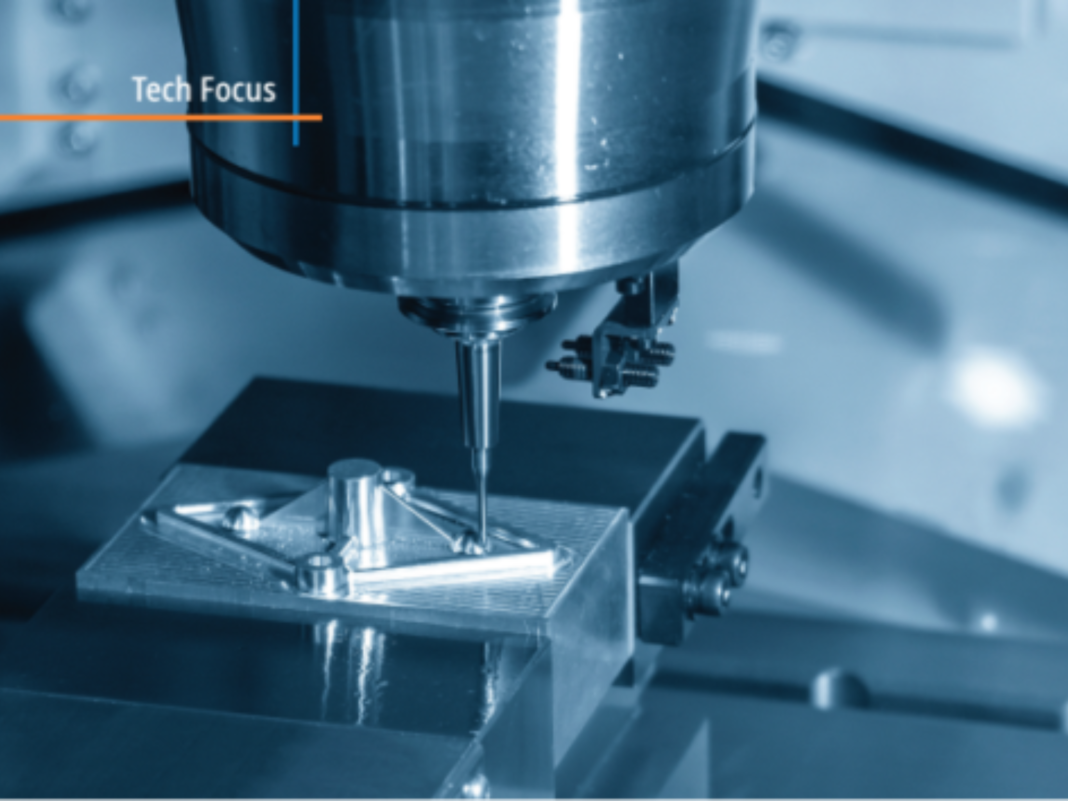
To succeed, toolmakers must modernise their equipment. Electronics tooling requires machines that are smaller, faster, and more precise, with high spindle speeds, fine wire cuts (0.5 mm, 0.1 mm, or even 0.08 mm), and very small cutters. Measuring equipment also needs upgrading, with smaller CMMs and advanced microscopes to ensure accuracy at the micro level.
Skills must evolve as well. Automotive tolerances differ from electronics, so toolmakers need enhanced hand skills, machining expertise, and design capabilities tailored to electronics. Training is critical, whether in India or abroad, to build this specialised knowledge.
Ultimately, entering the electronics industry requires a complete shift in mindset, investment in precision equipment, and continuous training of people. With these changes, tool rooms can align themselves to meet the sector’s demanding requirements and position themselves for new opportunities.
Q. If you had to advise Indian toolmakers on the five most important areas of improvement, what would they be?
I would highlight five key parameters:
- Become End-to-End Solution Providers: Toolmakers should take responsibility from design to final qualification, including DFM, manufacturing, trials, and processing. Delivering a complete solution and guiding customers on how to process ensures greater value and trust.
- Stick to Timelines: Whatever commitment is made, it must be honoured. Reliability in delivery schedules is critical to building credibility with customers.
- Prioritise Trust over Short-Term Cost Savings: If damage occurs or something goes wrong, replace the component rather than patching or delivering a flawed insert. Saving a few thousand rupees is not worth losing customer confidence. Long-term loyalty comes from integrity.
- Focus on Skill Development and Process Knowledge: Continuous training of people is essential, along with adopting automation. Toolmakers must strengthen their understanding of scientific processing methods to avoid failures and improve efficiency.
- Leverage Data Analysis: Collect and analyse shop-floor data machining hours, programming delays, cutter selection, speeds, and feeds. By identifying inefficiencies, toolmakers can optimise processes, reduce waste, and enhance productivity.
By focusing on these five areas, Indian toolmakers can position themselves as globally competitive players, ready to meet the growing demand from industries such as electronics, automotive, aerospace, and medical devices.
This interview was published in TAGMA Times