

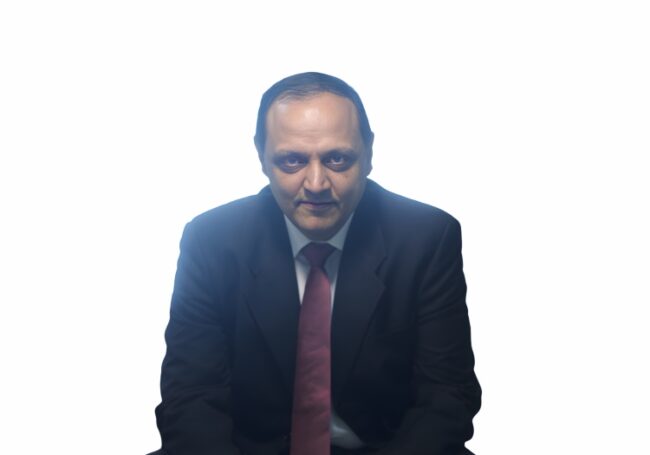
“Participation in DMI has consistently contributed to strengthening connections within the tooling ecosystem. It provides a platform to engage with customers, understand evolving industry requirements, and explore potential collaborations. More importantly, it enables alignment across the value chain in future directions, whether in terms of technology adoption, capability development, or market opportunities. For companies like voestalpine, it serves as a valuable touchpoint to stay closely connected with the industry’s progress in India,” says Alok Jhamb, MD, voestalpine High Performance Metals India, in an interview for the 14th Die & Mould India International Exhibition 2026.
How do you view the evolution of DMI as a platform for the die and mould industry, and what future direction would you like it to take?
DMI has evolved into a meaningful platform for the die and mould ecosystem in India, primarily because of the quality of stakeholders it brings together. It is not just about showcasing products, but about enabling dialogue across toolmakers, OEMs, and material suppliers. Going forward, I would expect DMI to move further towards application-led discussions, real-world case studies, and stronger OEM–toolroom collaboration. The more the platform focuses on knowledge exchange and problem-solving, the more valuable it becomes for companies like voestalpine.
How do you assess the current state of the Indian die and mould industry, and what key trends, challenges, and opportunities do you foresee leading up to 2026?
The Indian die and mould industry is clearly at an inflection point. There is a visible shift towards high-precision and high-complexity tooling, along with increasing expectations around tool life and performance consistency. At the same time, the industry faces challenges such as gaps in advanced capabilities compared to global benchmarks and a shortage of skilled manpower in high-end tooling. However, these challenges also present opportunities, particularly in import substitution, increasing adoption of premium materials, and India’s emergence as a global sourcing hub. By 2026, we are likely to see a clear distinction between conventional toolrooms and those that are technology-driven.
Which key industries are driving demand for dies and moulds today, and how are their evolving requirements shaping the capabilities of Indian toolmakers?
Demand for dies and moulds is being driven by multiple sectors, each bringing its own level of complexity and opportunity. Automotive and EVs continue to be major drivers, especially with the shift toward lightweighting and new materials. Aerospace and defence demand high-performance materials and precision tooling, while the medical sector requires extremely high repeatability and quality standards. Consumer goods and electronics are pushing for shorter product cycles, which directly impacts tooling lead times and efficiency. Together, these sectors are encouraging Indian toolmakers to move beyond cost competitiveness and focus on value and capability.
How are initiatives like Make in India and the global China+1 strategy influencing localization in the tooling sector, and what impact is this having on expectations from Indian toolmakers?
Initiatives such as Make in India, combined with the global China+1 strategy, are significantly accelerating localization in the tooling sector. OEMs are increasingly looking to build reliable domestic supply chains, which opens up long-term opportunities for Indian toolmakers. However, this shift also comes with higher expectations in terms of quality, consistency, and delivery. The focus now has to be on upgrading capabilities rather than just expanding capacity, as global customers are benchmarking Indian suppliers against the best in the world.
How is technology adoption shaping the die and mould industry, and which emerging tools and innovations are becoming key differentiators for toolmakers?
Technology adoption is becoming a key differentiator in the die and mould industry. Simulation tools are helping reduce trial cycles and improve first-time-right outcomes, while automation in machining and finishing is enhancing consistency and productivity. Additive manufacturing is opening up new possibilities, especially in areas like conformal cooling, and early applications of AI are beginning to influence process optimization. The real competitive advantage will lie in the ability to integrate material science with digital tools to deliver more efficient and reliable tooling solutions.
How important are precision manufacturing and talent development for the long-term growth of the die and mould industry, and what steps are needed to build the required skilled workforce?
Precision manufacturing and talent development are fundamental to the industry’s long-term growth. Entering high-value global markets requires consistent precision and process control, which in turn depends on both technology and skilled manpower. There is a growing need for structured upskilling, particularly in advanced machining, materials, and simulation technologies. Stronger collaboration between industry and academia will be critical in building a workforce that can support the next phase of growth for the die and mould sector.
How has participation in DMI contributed to strengthening industry connections, and what value does it offer in terms of collaboration and alignment within the tooling ecosystem?
Participation in DMI has consistently contributed to strengthening connections within the tooling ecosystem. It provides a platform to engage with customers, understand evolving industry requirements, and explore potential collaborations. More importantly, it enables alignment across the value chain in future directions, whether in terms of technology adoption, capability development, or market opportunities. For companies like voestalpine, it serves as a valuable touchpoint to stay closely connected with the industry’s progress in India.

COMMENTS