

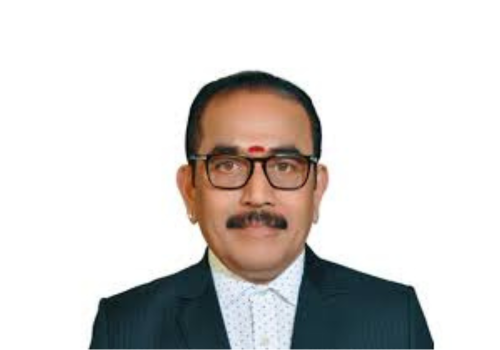
“As a premier platform organised by TAGMA India, DMI 2026, scheduled in April this year, will bring together industry leaders, global buyers, and innovators to showcase advancements in precision tooling, smart manufacturing, and die & mould technologies. It offers unmatched networking, knowledge-sharing sessions on emerging trends like automation and additive manufacturing, and business matchmaking that can propel Indian toolrooms toward export growth and technological upgrades,” says D. M. Sheregar, President, TAGMA India.
The tooling industry is often referred to as the ‘mother industry’ of manufacturing. From your experience of over three decades, how has the Indian tooling ecosystem evolved during this journey?When I started 30 years ago, the Indian tooling industry was still in a developing phase. Most toolrooms were small, capabilities were limited, and we relied heavily on imports, from tools to technologies. almost everything. Precision machining, advanced software, and automation were not as widely accessible and common as they are today.
Over the years, I’m happy to share that the ecosystem has evolved significantly. Today, most of the tool rooms in India are equipped with advanced CNC machining centres, sophisticated CAD/CAM systems, and high-precision inspection facilities. Indian toolmakers are now much more capable of delivering complex moulds and dies that meet global quality standards.
Another major shift has been the industry’s exposure to global markets. Earlier, the focus was largely to cover and fulfil the domestic demand, but today Indian toolmakers are supplying to Europe, the USA, and other markets. This exposure is the evidence that the Indian tool rooms have raised the bar in terms of quality, delivery timelines, and technological capabilities.
At the same time, the industry has become more organised through platforms like Tool & Gauge Manufacturers Association of India, which has played a significant role in bringing toolmakers together and promoting collaboration. Overall, I would say the journey has been one of steady transformation from a largely domestic support industry to an emerging global contributor in manufacturing.
As both the Managing Director of Devu Tools Pvt. Ltd. and the President of Tool & Gauge Manufacturers Association of India, you closely observe the challenges faced by toolmakers. What are the most pressing issues the industry must address today?
From my perspective, there are a few structural challenges that the Indian tooling industry must address as soon as possible if we want to strengthen our position both domestically and globally.
First, skill development remains one of the biggest concerns in India. Toolmaking is a specialised field that demands precision, experience, and a deep understanding of manufacturing processes. While we do have training institutes and toolroom training centres, many young professionals entering the industry still lack exposure to machinery and modern manufacturing practices. Bridging this gap between training and industry is far more serious challenge than we think.
Another major issue is access to capital. Modern toolrooms require continuous investment in high-precision CNC machines, automation systems, software, and metrology. For many small and medium toolmakers, acquiring these technologies becomes challenging due to the high cost of financing.
We also see challenges in terms of collaboration during the product development stage. Often, toolmakers are involved only after the design is finalised, which sometimes leads to manufacturability issues. If toolrooms are involved earlier in the design phase, more like DFM and DFA, it can significantly improve efficiency and reduce development cycles.
Finally, the industry needs to strengthen its ecosystem and collaboration, opting for a cluster-like environment. In many global manufacturing hubs, toolmakers, suppliers, and manufacturers operate within a closely connected ecosystem that enables faster development and subcontracting. Building such collaborative networks in India will be important for scaling capabilities. Addressing these challenges collectively will be key to building a stronger and more competitive tooling industry in India.
Many Indian toolrooms are now serving global customers. What capabilities must Indian toolmakers develop to compete with established tooling hubs such as China, Korea, and Europe?
We are already at a quite good pace; things that can give Indian toolmakers good acceleration are three key areas: technology, precision, and delivery reliability.
First, there is a need to continuously invest in advanced technologies such as high-speed CNC machining, multi-axis machining, simulation, and digital solutions. These technologies are the core pillars to meet the high precision and complexity expected by global customers. Second, process discipline and quality standards must be consistently maintained. Global OEMs expect tools that meet strict tolerances along with predictable performance and durability.
Finally, speed and project management will provide the consistency needed to be seen as a realiable source. International customers value toolmakers who can deliver complex moulds within shorter lead times without compromising quality. Skill development remains a recurring concern in the tooling sector. What steps can industry and institutions take together to make the next generation of toolmakers more industry-ready?
The industry has historically depended heavily on the automotive sector. How important is diversification into sectors like aerospace, electronics, and medical devices for the future of Indian toolrooms, and how can platforms like the upcoming Die & Mould India (DMI) 2026 exhibition support this shift?
The automotive sector has traditionally been the backbone of the tooling industry in India, and even today a large share of tooling demand comes from automotive components. However, depending too heavily on a single sector can make the industry vulnerable to market fluctuations.
Diversification is no longer a choice. The positive thing is that we are already seeing growing demand from sectors such as electronics, consumer goods, medical devices, and aerospace. These industries require high-precision tooling, especially for complex plastic and engineered components, which is creating new opportunities for capable toolmakers.
Platforms like Die & Mould India (DMI) 2026, organised by TAGMA India and set for later this year, will be instrumental in driving this diversification. The exhibition will feature dedicated zones and sessions on high-precision tooling for aerospace, electronics, and medical devices, enabling Indian toolrooms to connect with global buyers, explore advanced technologies, and gain insights into sector-specific standards and validation processes.
At the same time, entering these sectors requires a shift in mindset. The quality expectations, validation processes, and documentation standards can be much higher compared to tooling for the automotive industry. In my view, the future growth of Indian toolrooms will come not only from the auto sector but also from a balanced presence across multiple industries, which will make the sector more resilient and globally competitive.
In your view, what differentiates a successful toolroom today compared to a decade ago?
A decade ago, the success of a toolroom was largely defined by its machining capability and craftsmanship. Having skilled machinists, good machines, and the ability to produce accurate moulds was often enough to stay competitive and relevant.
But today, the expectations from customers are through the roof. A successful toolroom now needs to combine technology, process discipline, and speed. Customers expect shorter lead times, higher precision, and consistent quality, which means toolrooms must adopt advanced CNC technologies, modern CAD/CAM systems, and very efficient project management.
Another important factor today is the ability to collaborate closely with customers, especially during the design and development stages. Mould makers that can provide design inputs, support design for manufacturability, and respond quickly to changes create much more value for their customers. In simple words, while machining skills remain fundamental, a successful toolroom today is one that integrates technology, skilled manpower, and efficient processes to deliver high-quality tools reliably and on time.
India still imports a significant share of its tooling requirements. How can the industry collectively work towards reducing this dependency?
It is very true that a significant portion of tooling demand in India is still met through imports, especially when it comes to complex or high-precision tools. In many cases, companies choose overseas suppliers because of their long-established ecosystems and the confidence built over decades.
However, I believe the gap is gradually narrowing. Today many Indian toolrooms are capable of delivering tools that meet global quality standards. What we need now is a continued flow of investment in advanced machinery, technology, and skilled manpower so that we can take on more complex tooling work. At the same time, OEMs and product designers in India start including toolmakers early in the development process. When toolrooms are included in the design process, we may provide valuable feedback on manufacturability and tooling efficiency. This not only improves the end product but also increases confidence in domestic talents. Another crucial issue is to strengthen the local tooling ecosystem, including suppliers, subcontractors, and qualified individuals. In countries with excellent tooling, the entire ecosystem works closely together.
In my opinion, cutting imports will take time, but with the proper collaboration and sustained skill development, Indian toolmakers are well positioned to capture a far larger share of the domestic market in the future years.
Looking ahead, what opportunities excite you the most for the Indian tooling industry over the next 5-10 years, particularly with events like the upcoming Die & Mould India (DMI) 2026 exhibition on the horizon?
I strongly believe that the coming decade holds far more opportunities for the Indian tooling industry than it has in the last 30 years. With more global manufacturers establishing their bases in India and the continued push toward localisation, the demand for high-quality tooling is only going to increase.
At the same time, we are seeing strong growth in sectors beyond automotive, such as electronics, consumer goods, medical devices, and packaging, which will require increasingly complex and high-precision moulds and dies. Another exciting opportunity I see lies in exports. Many Indian toolrooms have already started supplying tools to global customers, and with continued investments in technology and skills, we have the potential to become a strong global sourcing hub for tooling.
Events like the upcoming Die & Mould India (DMI) 2026 exhibition will play a pivotal role in accelerating these opportunities. As a premier platform organised by TAGMA India, DMI 2026, scheduled for later this year, will bring together industry leaders, global buyers, and innovators to showcase advancements in precision tooling, smart manufacturing, and die & mould technologies. It offers unmatched networking, knowledge-sharing sessions on emerging trends like automation and additive manufacturing, and business matchmaking that can propel Indian toolrooms toward export growth and technological upgrades.
Overall, with the right focus on technology, skills, and collaboration, I see a very fruitful and growing graph for the Indian tooling industry in the years ahead.

COMMENTS