

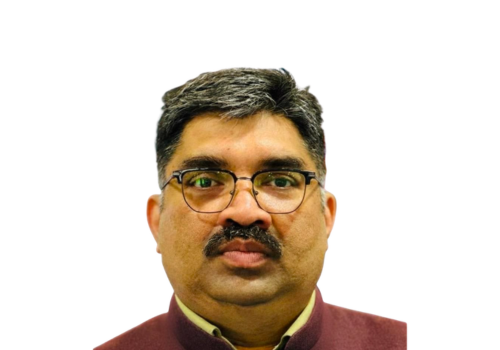
“Since moulds are the “mother tools” of manufacturing, every policy aiming to boost output (like PLI schemes or ‘Make in India’) directly translates into a need for more and better moulds,” says Rajesh Nambiar, Partner, Mouldspex. This interview was taken for DMI 2026.
What key trends, challenges, or growth opportunities do you see in the Indian die and mould industry today? How might they evolve in 2026?
The Indian die and mould industry is currently in a “breakout” phase. It is transitioning from a cost-driven support sector to a value-driven export hub. As we move through 2026, the industry is being reshaped by the “China +1” strategy and the maturity of government PLI (Production Linked Incentive) schemes.
Which sectors are driving the demand for dies and moulds? What opportunities do they present for the industry?
The automotive, medical, and defence sectors are driving demand for dies and moulds due to the need for precision components, lightweight materials, and high-volume production. These sectors are creating opportunities for the die and mould industry to innovate in advanced tooling, high-accuracy manufacturing, and custom mould solutions.
How is India’s manufacturing push, for instance, through initiatives like ‘Make in India’ or strategies like China+1, impacting the die and mould industry overall?
India’s manufacturing push is acting as a massive demand multiplier for the die and mould industry. Since moulds are the “mother tools” of manufacturing, every policy aiming to boost output (like PLI schemes or ‘Make in India’) directly translates into a need for more and better moulds.
How are innovations or technologies, such as additive manufacturing, AI, and simulations, shaping the competitiveness of the die and mould industry?
To compete globally, the Indian die and mould industry is pivoting from “craft-based” manufacturing to “science-based” engineering. The following technologies are currently the biggest drivers of competitiveness, shifting the focus from low labour costs to high precision and speed.
What role do initiatives like precision manufacturing and talent development play in expanding the die and mould industry into new markets?
Precision manufacturing and talent development are the dual engines powering the Indian die and mould industry’s expansion from a domestic support sector to a global export player. While precision manufacturing unlocks access to high-value markets (like aerospace and medical), talent development ensures the capacity to deliver on that potential.
How has participating in past DMI exhibitions contributed to growth, networking, or collaborations within the tooling ecosystem?
TAGMA’s Die & Mould India (DMI) exhibition has evolved from a simple marketing activity into a critical strategic lever for industry growth. It serves as the primary “matchmaking” event, where the fragmented Indian tooling ecosystem (comprising thousands of MSMEs) connects with global OEMs and technology providers.
What makes DMI 2026 a valuable platform for the die and mould industry to showcase its strengths to domestic or global customers?
Participating in Die & Mould India (DMI) 2026 is arguably the most critical strategic move a company in this sector can make this year. As the industry transitions from “local repair” to “global export”, this exhibition serves as the primary gateway to verify that shift.
This interview was published in TAGMA Times Magazine.

COMMENTS