

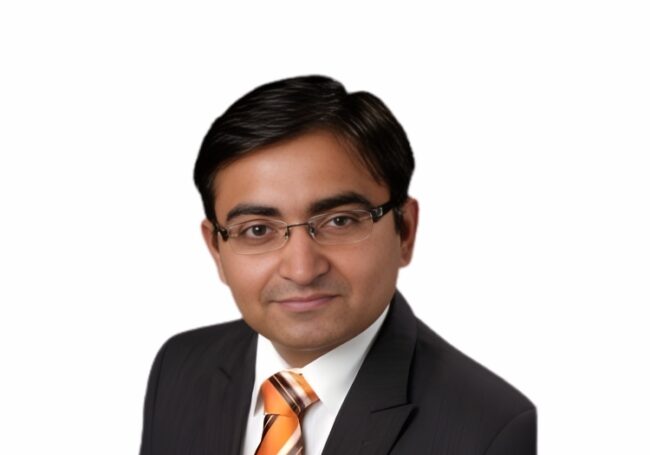
“DMI has developed into a platform focused on building an ecosystem, rather than simply showcasing products. We have participated in the show since its inception and recognized that it provides valuable opportunities for stakeholders across the industry to exchange knowledge and support the broader needs of the tooling ecosystem,” says Rajnikant Patel, General Manager – India / Sri Lanka / UAE, HASCO India Pvt Ltd., in an interview for the 14th Die & Mould India International Exhibition 2026.
What key trends, challenges, or growth opportunities do you see in the Indian die and mould industry today, and how might they evolve by 2026?
The Indian die and mould industry is gaining from India’s consumption-driven economy—over 60% of the GDP is fuelled by steadily increasing demand. This growth is creating rising needs for automobiles, appliances, electronics, packaging, and medical products, all of which require greater production volumes and faster cycles. The market looks promising, especially with the adoption of electric vehicles that demand innovation and complex designs, as well as defence indigenisation, which calls for reliability and higher technical standards.
Despite these opportunities, the industry faces a major hurdle: a shortage of skilled workers. By 2026, tool makers who bridge the skill gap and effectively integrate standardized components, advanced design techniques, and precision manufacturing will be best positioned to boost productivity, maintain consistency, and scale up operations.
Which sectors (e.g., automotive, EVs, aerospace, medical) are driving demand for dies and moulds, and what opportunities do they present for the industry?
Automotive continues to be a significant driver of demand; however, electric vehicles (EVs), defence, and the medical sector are increasingly influencing market dynamics. EVs require greater precision, while defence demands high accuracy, reliability, and stringent quality standards. The medical sector is expected to drive the need for multi-cavity moulds with consistently high quality. Overall, these developments present opportunities not only in terms of volume but also for higher-value, precision-driven tooling solutions.
How is India’s manufacturing push (e.g., Make in India, China+1) impacting the die and mould sector overall?
Manufacturing has increasingly shifted to India; however, expectations such as timely delivery, quality, and repeatability remain consistent. As a result, competitiveness is evaluated not only by cost but also by reliability and global compatibility. This trend underscores the growing importance of implementing industry standards that are internationally recognized.
What innovations or technologies (e.g., additive manufacturing, automation, simulations) are shaping the competitiveness of the die and mould industry?
The die and mould industry’s competitiveness today depends on how well technology is integrated throughout the tooling process. Not only is using advanced technology important, but choosing the right innovations, applying standardization, and following dependable processes are equally vital. These strategies help reduce risks, decrease lead times, and cut overall lifecycle costs.
What role do initiatives like precision manufacturing and talent development play in expanding the die and mould industry into new markets?
Precision manufacturing enables entry into high-value sectors such as EVs, defence, aerospace, and medical, all of which require micron-level accuracy and reliable performance. Talent development in engineering standards, simulation, materials, and process control is essential. With skilled professionals and standardized systems, Indian toolmakers can meet global quality standards and serve international clients effectively.
How has participating in past DMI exhibitions contributed to growth, networking, or collaborations within the tooling ecosystem?
DMI has developed into a platform focused on building an ecosystem, rather than simply showcasing products. We have participated in the show since its inception and recognized that it provides valuable opportunities for stakeholders across the industry to exchange knowledge and support the broader needs of the tooling ecosystem.
What makes DMI 2026 a valuable platform for the die and mould industry to showcase its strengths to domestic or global customers?
DMI stands as the exclusive tooling exhibition focused on the die and mould sector from India, presenting India’s tooling capabilities to domestic and international stakeholders biennially. This event provides insight into India’s preparedness for global competition.
What products, technologies, or launches are you planning to showcase at DMI 2026, and why are they significant for the industry?
The focus is on demonstrating the ways in which high-quality standard mould components and system solutions facilitate toolmakers in shortening lead times, improving reliability, and effectively managing complexity. We provide comprehensive offerings that support precision manufacturing, optimise cooling processes, and contribute to extended tool longevity. These advantages are substantial, enabling toolmakers to increase production efficiency, mitigate risks, and comply with international best practices.

COMMENTS