


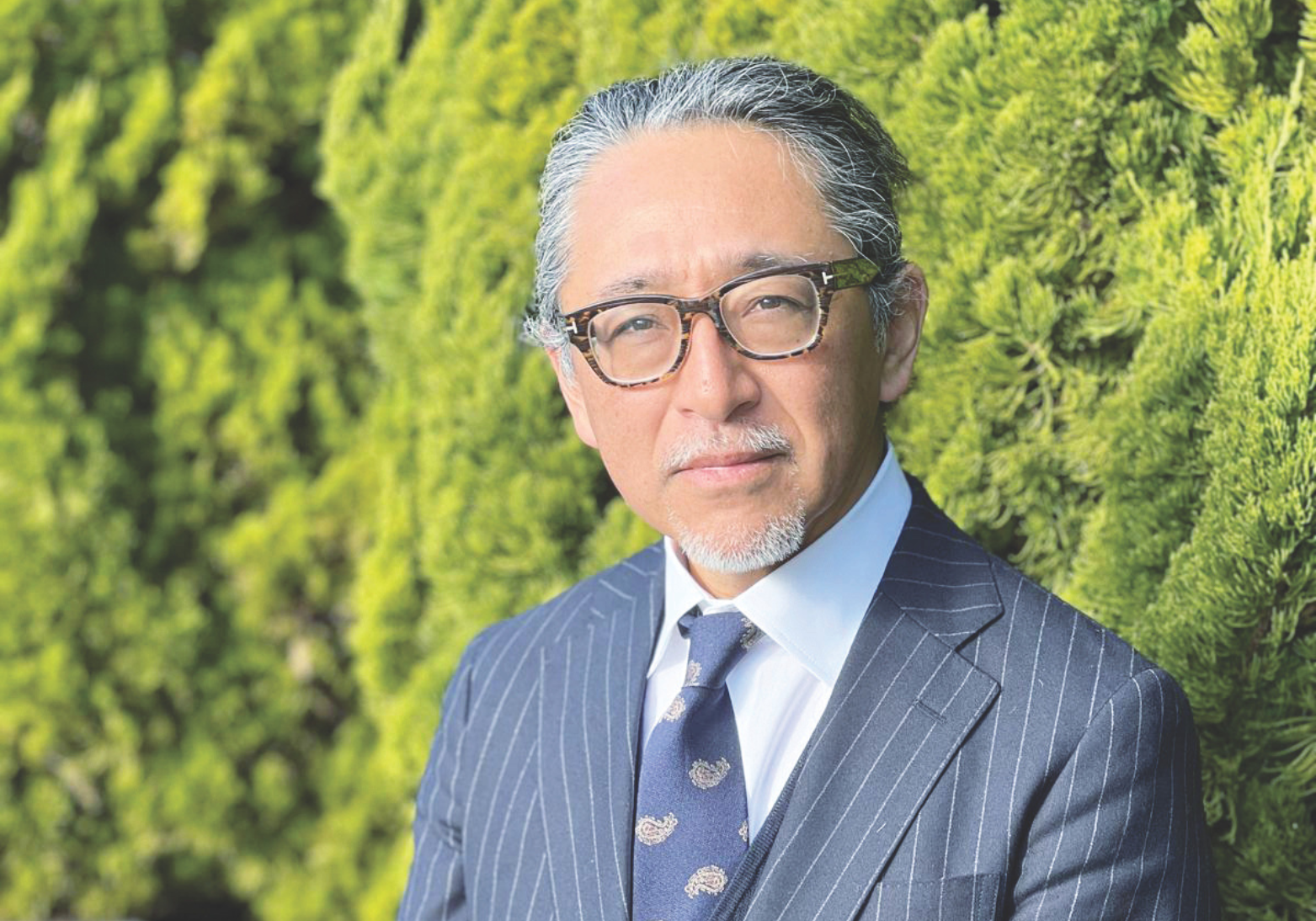
– By Sudhanshu Nayak
“The presence of a dedicated Japanese Pavilion at Die & Mould India is a very meaningful step in strengthening collaboration between the tooling industries of both countries. For international visitors, events like DMI provide valuable insights into the capabilities of Indian toolmakers and the scale of India’s manufacturing sector. For Indian companies, these events open doors to global partnerships and technology exchange,” says Shigemaro Yasui, CEO, Japan India Business Bureau (JIBB).
As someone who has been actively bridging business relations between Japan and India, how do you see the evolution of this partnership in recent years?
The India–Japan partnership has evolved into one of the most dynamic economic collaborations in the Asia-Pacific region. Over the past decade, both countries have moved beyond traditional trade relations toward deeper strategic cooperation in manufacturing, technology, and infrastructure.
Japan has long been known for its strengths in precision engineering, automation, and manufacturing excellence, while India brings immense advantages in terms of engineering talent, digital capabilities, and a rapidly expanding market. When these strengths come together, they create a powerful synergy.
In fact, the collaboration has now expanded into advanced sectors such as artificial intelligence, semiconductors, digital infrastructure, and clean energy. Governments and industry leaders from both nations are actively encouraging this integration because they see tremendous long-term potential in combining Japanese manufacturing expertise with India’s technological talent and entrepreneurial energy.
For many Japanese companies, India is no longer just a market—it is becoming a strategic partner for global manufacturing and innovation.
Japanese companies have been increasing investments in India. What factors are driving this growing interest?
Several factors are contributing to the increasing interest of Japanese companies in India.
First is the “China Plus One” strategy, where many global manufacturers are diversifying their supply chains and production bases. India offers a strong alternative due to its large workforce, improving infrastructure, and growing domestic demand.
Second is the policy support from the Indian government through initiatives such as Make in India, Production Linked Incentive (PLI) schemes, and infrastructure development. These initiatives have significantly improved the business environment for foreign investors.
Third is the long-term vision between the two governments. Japan has committed to major investments in India across areas like mobility, artificial intelligence, semiconductors, healthcare, and environment. These investments are expected to run into tens of billions of dollars over the coming decade, reflecting the confidence Japanese industry has in India’s future. Additionally, India’s young demographic profile and large engineering talent pool make it an ideal destination for technology-driven investments.
Automation and robotics are areas where Japan has global leadership. How do you see automation transforming Indian manufacturing?
Automation is already beginning to transform Indian manufacturing, and its impact will accelerate significantly over the next decade.
Japan has decades of experience in robotics, lean manufacturing, and process optimization. Technologies such as industrial robots, smart sensors, and AI-driven quality control systems are becoming essential for maintaining global competitiveness. In India, many manufacturers are now adopting these technologies to improve productivity, reduce defects, and shorten product development cycles. This is particularly important in sectors such as automotive, electronics, aerospace, and precision tooling.
What excites me most is the combination of Japanese hardware expertise and Indian software capabilities. By integrating robotics, IoT, and data analytics, Indian factories can move toward smart manufacturing environments that are both efficient and flexible. This transformation will not only enhance manufacturing quality but also enable Indian companies to compete more effectively in global supply chains.
Japan will have a dedicated pavilion at Die & Mould India this year with nine participating companies, all of them toolmakers. How significant is this participation for strengthening India–Japan collaboration in the tooling sector?
The presence of a dedicated Japanese Pavilion at Die & Mould India is a very meaningful step in strengthening collaboration between the tooling industries of both countries.
Japan has a long-standing reputation for precision engineering, high-quality tooling, and advanced manufacturing technologies. The nine companies participating in the pavilion represent some of the capabilities that Japanese toolmakers have developed over decades, particularly in high-precision dies, moulds, and tooling solutions. For Indian manufacturers and toolmakers, this pavilion provides an opportunity to directly interact with Japanese companies, understand their technologies, and explore potential collaborations. At the same time, Japanese companies will be able to gain a deeper understanding of India’s rapidly expanding manufacturing ecosystem and the growing demand for advanced tooling solutions.
I believe such participation creates a platform for knowledge exchange, technology partnerships, and long-term business relationships. As India’s manufacturing sector continues to expand, collaborations between Japanese and Indian toolmakers can play a very important role in strengthening the overall tooling ecosystem.
The Indian tooling industry is growing rapidly. From a Japanese perspective, how do you view India’s tooling ecosystem today?
The Indian tooling industry has made remarkable progress over the past decade.
Historically, India relied heavily on imports for high-precision tooling. However, today many Indian toolmakers are investing in advanced CNC machines, simulation technologies, and automation systems to improve quality and reduce lead times.
At the same time, India’s manufacturing sector is expanding across multiple industries including automotive, electronics, aerospace, medical devices, and consumer products. This naturally increases the demand for high-precision tooling solutions. From a Japanese perspective, this represents an opportunity for collaboration rather than competition. Japanese companies can contribute advanced technologies, materials, and production methodologies, while Indian toolmakers bring cost efficiency, flexibility, and growing technical capabilities. Together, they can create a strong and globally competitive tooling ecosystem.
Exhibitions like Die & Mould India (DMI) bring together stakeholders across the manufacturing value chain. How important are such platforms for international collaboration?
Industry platforms like Die & Mould India play a very important role in strengthening collaboration.
Manufacturing is an ecosystem industry. Toolmakers, machine builders, material suppliers, software providers, and OEMs all depend on each other. Exhibitions create a space where these stakeholders can exchange ideas, explore partnerships, and understand emerging technologies.
For international visitors, events like DMI provide valuable insights into the capabilities of Indian toolmakers and the scale of India’s manufacturing sector. For Indian companies, these events open doors to global partnerships and technology exchange. In many cases, collaborations that begin with simple discussions at exhibitions eventually grow into long-term business partnerships.
Looking ahead, what opportunities do you see for deeper India–Japan collaboration in manufacturing and technology?
The opportunities are immense. In manufacturing, I see strong collaboration in areas such as precision tooling, semiconductor supply chains, electric vehicles, robotics, and advanced materials. Japan’s engineering excellence combined with India’s manufacturing scale can create globally competitive solutions. In technology, fields such as AI, digital manufacturing, and smart factories will drive the next phase of industrial growth.
Finally, human resource collaboration will also be crucial. Japan faces a demographic challenge due to an ageing population, while India has one of the youngest workforces in the world. This creates a natural complementarity that can strengthen the partnership further. If both countries continue to invest in technology exchange, skill development, and joint innovation, the India–Japan partnership can become one of the most influential industrial alliances of the future.

COMMENTS