

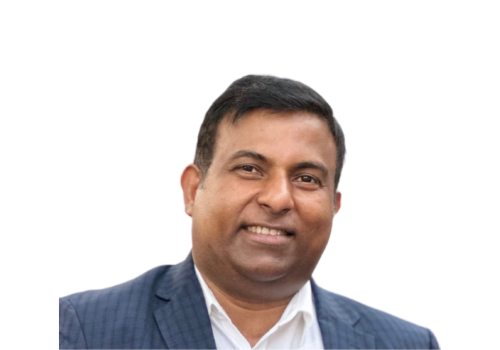
“AI and ML could significantly help reduce delivery time and costs through better estimation, planning, and execution,” says Vinod Mullasseril, Founder & CEO, INDEEYA. This interview was taken for DMI 2026.
What key trends, challenges, or growth opportunities do you see in the Indian die and mould industry today? How might they evolve in 2026?
One of the key trends is the growing shift toward digitalisation. The industry is increasingly recognising its benefits. Process-driven manufacturing improves productivity, enhances resource utilisation, and enables optimal inventory management, leading to better working capital management and healthier cash flow.
There are several challenges; the top four are: shortage of skilled labour; high cost of capital; customers treating tooling suppliers as one-time, price-driven vendors (similar to a commodity) rather than as engineering development partners, and not supporting long-term relationships; and government and policymakers overlooking the strategic importance of the tooling industry. The current geopolitical situation, along with the upcoming Free Trade Agreement (FTA) with the EU, presents India with a significant market opportunity.
A key advantage of European customers is their preference for long-term partnerships. However, they validate both processes and infrastructure to build trust. Digitalising end-to-end processes is the most effective way to capture this opportunity. AI-enabled capacity scheduling and real-time data can deliver substantial cost savings while improving resource utilisation and overall productivity.
Which sectors are driving the demand for dies and moulds? What opportunities do they present for the industry?
All of these developments, combined with the upcoming India–EU FTA, present a significant opportunity. For example, Europe is expected to spend several hundred billion euros on defence alone over the next few years.
How is India’s manufacturing push, for instance, through initiatives like ‘Make in India’ or strategies like China+1, impacting the die and mould industry overall?
There’s no impact. None of these strategies consider tooling as a strategical capability yet. There are no focused policies that can benefit this industry at the root level. Policymakers need to be better educated by the industry influencers.
How are innovations or technologies, such as additive manufacturing, AI, and simulations, shaping the competitiveness of the die and mould industry?
Additive Manufacturing, once developed to deliver higher precision at larger sizes, could truly redefine the tooling industry. AI and ML could significantly help reduce delivery time and costs through better estimation, planning, and execution.
What role do initiatives like precision manufacturing and talent development play in expanding the die and mould industry into new markets?
Precision manufacturing and talent development are the two key pillars of this industry, as they enable higher accuracy, consistent quality, and faster innovation while building a skilled workforce capable of meeting global standards.
How has participating in past DMI exhibitions contributed to growth, networking, or collaborations within the tooling ecosystem?
We will be participating in DMI for the first time.
What makes DMI 2026 a valuable platform for the die and mould industry to showcase its strengths to domestic or global customers?
Exhibitions provide an opportunity to showcase our capabilities to the world. DMI, being the largest tooling exhibition in the country, plays a key role in portraying India’s tooling capabilities on a global platform.
This interview was published in TAGMA Times Magazine.

COMMENTS