

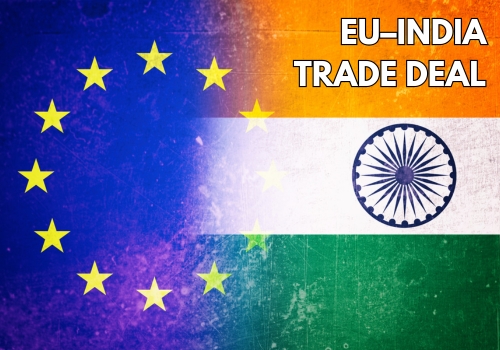
On January 27, 2026, India and the European Union (EU) concluded negotiations on the Free Trade Agreement, a deal that’s been widely described as the “mother of all trade deals”. This FTA is designed to reduce tariffs on over 90% of goods traded between the two economies. According to the European Commission, the bilateral trade between India and the EU was 120 billion euros in 2024.
Context and Industry Relevance
While the FTA has been announced and the proposals agreed upon, it is important to note that it is not yet fully in force. Legal vetting, ratification by the European Parliament, and India’s domestic approval processes are yet to be processed. Simply put, the actual implementation of these new tariffs is likely to unfold over the next few years. Nevertheless, understanding its potential impacts is critical for firms looking to position themselves advantageously. Let’s take a look at its implications for the Indian die and mould industry.
Tariff Elimination and Export Competitiveness
At its core, the agreement signals the removal of export tariffs on Indian engineering products, including industrial machinery, machine tools, dies and moulds, electrical equipment, and mechanical appliances, in Europe. These products face significant tariffs under the current WTO rules, which limit competitiveness and increase costs for EU buyers. Once the FTA is implemented fully, it will eliminate these duties, allowing Indian manufacturers to price their products more competitively and access European markets with ease and better predictability.
The technical implications of this agreement for the die and mould industry will be profound. Dies and moulds are essential components for automotive, aerospace, consumer appliance, and industrial fabrication sectors. They are high-precision products that rely on highly advanced manufacturing processes, from CNC machining and EDM to specialised grinding and inspection. The reduced tariffs will give Indian exporters the upper edge to compete on cost without compromising quality. Thus, once effective, this trade will definitely boost the long-term relationship between the Indian and EU tooling industries.
Access to Technology and Phased Benefits
At the same time, the deal will open up opportunities on the input side. European machinery and high-precision tooling, such as CNC, grinders, EDM machines, inspection equipment, and specialised fixtures, will face significantly reduced or zero import duties when brought into India. For die and mould manufacturers, this means easy access to advanced technologies with lower capital costs.
The FTA’s benefits will phase in over time. For plastics, some duties are removed at entry into force, with the rest over seven years; for car parts, most tariffs will be eliminated in five to ten years; and for machinery and tooling, about half the tariffs will drop immediately, with the remainder phased over a decade. This staggered implementation will allow firms to plan strategically, aligning capacity expansion, technology upgrades, and workforce training with the timeline of tariff reduction.
Competitive Pressures and Expanding Opportunities
Yet, opportunities come with new competitive pressures. European machinery and tooling companies will find it easier to sell into India, bringing high-precision, automated, and digital-ready solutions. This particular deal will push the Indian die and mould manufacturers to modernise, adopt advanced manufacturing technologies, and continuously improve quality to stay relevant. In the automotive sector, the reduction of duties on European cars from 70–100% to 10–40% over time will not only expand consumer choice but also challenge domestic mid- and premium-segment manufacturers, indirectly influencing demand for local dies and moulds.
The broader context is equally relevant. Indian electronics and engineering goods will benefit, as tariffs up to 10% are eliminated, while the rubber industry will gain from India’s natural advantage in global tyre and automotive supply chains. These shifts will create synergies for die and mould manufacturers, who will supply critical tooling across these sectors, amplifying the potential impact of the FTA.
Regulatory Facilitation and the Road Ahead
Non-tariff facilitators, including simplified customs procedures, regulatory cooperation, and standards alignment, will further ease market entry for Indian exporters. Harmonisation of mechanical, safety, and environmental standards with the EU will reduce the need for repeated testing and certification, cutting costs and accelerating time to market. However, Indian companies must remain mindful of carbon-related obligations, such as the EU’s Carbon Border Adjustment Mechanism (CBAM), which may require reporting and compliance on steel and other high-carbon inputs.
Ultimately, the India–EU FTA will create a strategic window for Indian die and mould manufacturers. Firms that invest in technology, quality, and operational excellence can secure long-term partnerships, integrate into European supply chains, and significantly boost exports. Those that delay may face increasing competition from European entrants in the domestic market, underscoring the need for proactive modernisation and capacity building.
Conclusion
In conclusion, while the “mother of all trade deals” is still in the process of ratification and implementation, its long-term implications for the Indian die and mould industry are transformative. By combining tariff-free market access, cheaper high-tech inputs, and regulatory facilitation, the FTA, once fully implemented, will offer Indian manufacturers the chance to compete globally, improve precision and productivity, and integrate into high-value European supply chains. Its success will depend not just on cost advantages but also on the ability to upgrade technology, ensure quality, and meet international standards, shaping a decade of growth and evolution for India’s precision engineering sector.

COMMENTS