
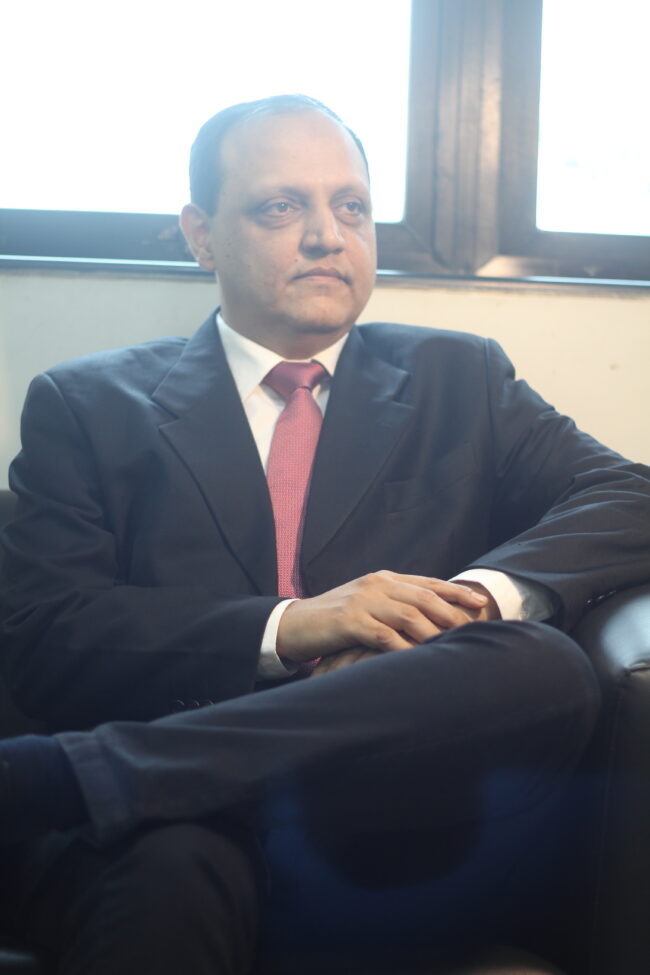
“Indian entrepreneurship in toolmaking is increasingly being recognised in advanced economies. From my global exposure, Indian toolmakers have strong foundational capabilities—particularly in design, machining, and quick turnaround for prototyping,” says Alok Jhamb, MD, voestalpine High Performance Metals India, in an conversation with Neha Basudkar Ghate.
How would you assess the current state of the Indian tool and die industry in terms of technological maturity and quality benchmarks?
The Indian tool and die industry has made significant strides in technological maturity and quality over the past decade. Apart from the challenges, the overall trajectory is positive and promising.
Indian toolmakers are increasingly adopting advanced materials, CNC machining, CAD/CAM integration, simulation tools, and best practices in heat treatment. This evolution in steel selection reflects a broader trend. The industry is becoming more quality-conscious, driven by the expectations of global OEMs and Tier-1 suppliers operating in India.
However, certain challenges persist, as there are gaps in terms of deep specialisation, skilled manpower, and access to high-end equipment across all regions. Standardisation and process benchmarking are evolving, but not yet consistent across the sector. While top-tier tool rooms match global standards, many medium-scale units are still on the path toward modernisation.
Despite these challenges, the pace of progress is encouraging. With the Indian government’s push for ‘Make in India’ and increasing localisation requirements from OEMs, the tooling industry is strategically positioned to grow and further upgrade its capabilities. The focus now is not just on producing tools—but on producing globally competitive, long-life, high-precision tools that can meet international benchmarks. There is huge opportunity ahead for Indian toolmakers to cater to global markets, provided they can meet these standards. We must not miss this massive opportunity before us.
From your global exposure, how do you compare Indian toolmakers with their European or East Asian counterparts when it comes to innovation and reliability?
From my global exposure, Indian toolmakers have strong foundational capabilities—particularly in design, machining, and quick turnaround for prototyping. Indian entrepreneurship in toolmaking is increasingly being recognised in advanced economies.
However, when compared to their European or East Asian counterparts, the key differentiators are innovation, reliability, and strategic positioning. These global players focus on total value creation—not just by delivering a tool, but by offering a complete solution that includes longer tool life, predictive maintenance, process optimisation, and integration into the customer’s production ecosystem. This approach allows them to command higher margins and maintain long-term partnerships, even in highly cost-sensitive markets.
Many Indian toolmakers still operate in a price-driven, transactional model with low profitability. This limits investment in innovation, automation, and talent development, which in turn limits their ability to move up the value chain. Indian Toolmakers should not be viewed as a cheaper substitute to the other Asian Toolmakers.
To bridge this gap, a mindset shift toward solution selling is essential. Instead of quoting tool prices, they must demonstrate how their solutions reduces the OEM’s total cost of ownership (TCO)—through better tool life, reduced downtime, or faster cycle times. This value-based approach is already being recognised by some progressive Indian tool shops are now offering tooling packages with performance guarantees, preventive support, and even outcome-based pricing models.
Additionally, scale economics must be considered. Indian toolmakers are often fragmented and operate at a smaller scale. To overcome this, strategies such as collaboration, clustering, or capacity sharing could be smart strategies to achieve scale and competitiveness.
In summary, while Indian toolmakers have the technical skillset and resilience, the next leap will come from a shift in mindset—from being product suppliers to being solution partners, delivering value across the entire product lifecycle.
What recent changes in tooling materials—especially high-performance steels—are influencing die and mold design today?
Recent advancements in high-performance tool steels are significantly shaping die and mold design, manufacturing, and maintenance and the trends is towards high performance materials. Ten years ago, the majority of forming tools in India were made using conventional tool steels like D3, which served the purpose but had limitations in wear resistance, toughness, and tool life. Today, there is a clear shift towards higher-performance materials such as 8% Cr steel which are now commonly used for forming and blanking applications. In addition, Powder Metallurgy (PM) steels, known for their superior wear resistance and toughness, are increasingly being adopted for critical tools—particularly in high-volume or precision-driven applications.
In demanding applications, the newer grades have to fulfill stringent specifications related to
- Thermal fatigue resistance (vital for HPDC and Hot forging)
- Toughness and ductility (reducing risk of cracking in complex and large tools)
- Wear resistance (increasing die life and reducing unplanned downtime)
- Polishability and texturing capability (important for aesthetic and optical Plastic parts)
- Dimensional stability during heat treatment (ensuring precise tool geometry)
In your opinion , how can the suppliers (Tool Steel, Service providers) to the Tooling Industry support the growth of the Indian Toolmakers?
Suppliers have a crucial role in enabling the growth of Indian toolmakers. First, we have to emulate the speed and agility seen in China’s toolmaking industry—particularly in faster delivery of tool steel, machining process, and heat treatment. Improved lead times are essential for Tier 1s and OEMs to notice a real impact.
Second, suppliers should engage early with the with the Tool makers or Tier 1s ideally from the design stage to better understand requirements, especially for critical applications like die casting or high-precision plastic injection molding.
Third, they must be proactive in problem-solving when tools underperform.
Overall, suppliers need to move from being vendors to becoming true partners, fostering a win-win ecosystem.
With increasing demand for lightweighting and precision, how do you see the role of specialty alloys and engineered materials evolving in toolmaking?
The demand for lightweighting and precision—especially driven by the automotive, aerospace, and e-mobility sectors—is reshaping the role of materials in toolmaking. As complex parts and advanced materials like high-strength steel and aluminum alloys become standard, specialty tool steels are critical enablers.
Cold Forming: For cold forming, where dimensional stability, fatigue resistance, and surface integrity are essential- Tool steels should offer excellent wear resistance, compressive strength, and toughness—critical for forming Advanced High-Strength Steels (AHSS) and complex geometries with minimal maintenance downtime.
Hot Stamping: In hot stamping, which is central to forming ultra-high strength steels for lightweight body structures, tool steels must withstand high thermal cycles and oxidation. superior resistance to thermal fatigue and softening at elevated temperatures are required. High Performance Tool Steels enable longer tool life, consistent dimensional accuracy, and reduced cracking—even in high-volume operations.
High Pressure Die Casting (HPDC): For HPDC, the emphasis is on cycle time, surface quality, and resistance to soldering and erosion. A combination of high performance Tool Steel with surface treatments and optimum Heat treatment should give reliable performance.
The Way Forward
With growing adoption of conformal cooling, additive manufacturing, and surface treatments, these specialty steels are not just raw materials—they’re enablers of smarter tool design. Toolmakers who align material selection with application demands—such as weight reduction, complex part geometries, and extended tool life—are better positioned to deliver value to OEMs and Tier 1s.
From a leadership standpoint, how do you see the role of material innovation evolving in supporting the increasingly complex requirements of OEMs and toolrooms in die and mould applications?
As requirements grow more complex, R&D in material innovation must keep pace. The focus should be on developing Materials suited to high productive environments. Customised solutions to toolmakers and OEMs can be offered with technologies like Electro Slag Remelting and Powder Metallurgy. Even in Additive Manufacturing, tooling-grade powders must deliver the right balance of toughness, hardness, and corrosion resistance—especially for applications like plastic injection moulding.
The die and mould sector is at the intersection of materials science and real-world manufacturing pressure. How do you drive collaboration between your internal R&D and the toolmakers on the ground to ensure practical, high-impact innovation?
We bridge R&D and shopfloor realities by fostering direct, two-way collaboration between our material experts from respective mills and toolmakers. The process often begins by analysing real-world tool failures and working backward to develop application-specific solutions, whether its optimising steel grades, heat treatment, or surface engineering. The process also actively involves toolmakers to on field trials, feedback cycles, and training sessions—ensuring innovations are not just technically sound, but practically viable.
In your experience, what can Indian die and mould makers learn from their global counterparts in terms of collaboration and materials-driven competitiveness?
Indian die and mold makers can learn three key lessons from global counterparts:
- Early collaboration with OEMs – Global toolmakers engage early in the design phase, influencing material and tool design decisions for better performance and cost efficiency.
- Materials as a performance driver – Instead of focusing solely on lowest cost, they select application-specific, high-performance steels, complemented by proper heat treatment and coatings.
- Process discipline and documentation – Global shops rigorously monitor tool life, failures, and treatment parameters, enabling continuous improvement and reliability.
By shifting focus from short-term cost to long-term value and lifecycle performance, Indian toolmakers can become globally competitive solution providers.
How can Indian Tool Rooms upskill their Human resources to be globally competitive?
I believe this is one of the most critical areas that needs immediate attention. This topic has been discussed extensively at various forums, including the International Tooling Summits organised by TAGMA.
The focus must be on addressing the training needs of tooling operators and designers—especially by bringing in knowledge related to automation, Industry 4.0, and artificial intelligence. There should be deeper engagement between the tooling industry and institutions such as engineering colleges, NTTF, and CIPET, through joint development projects and collaborative learning initiatives.
Most importantly, the involvement of promoters and management of toolmakers, Tier-1 suppliers, and OEMs must personally invest time and energy into initiating and actively monitoring learning and development efforts within their organisations.
I believe that apart from Technology- Human skills will play a key role in the long term success of the Indian Tooling Industry.
This interview was published in TAGMA Times