
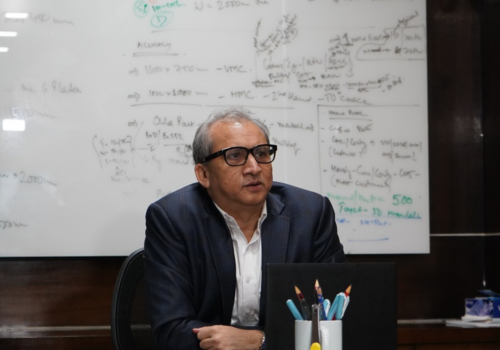
“Global demand for tool and die steel is increasing rapidly due to applications extending well beyond traditional sectors. Industries such as EVs, packaging, and even modern construction are increasingly relying on high-performance tool steels”, says Sandeep Jain, Director, Sandeep EdgeTech in conversation with Neha Basudkar Ghate.
The Indian tool steel market is seeing strong demand from the automotive sector, aerospace, defence, packaging, white goods and construction industries, driven by the need for advanced tools and materials. What are the main challenges in meeting the evolving requirements of OEMs in this segment, particularly regarding material performance and supply reliability?
One of the primary challenges in meeting OEM expectations is the inconsistent availability of high-quality raw materials within the country. Although India is the world’s second-largest steel producer, the tool steel segment still relies heavily on imports, which impacts both delivery timelines and quality consistency. Additionally, there’s often a gap in technical understanding between OEMs and suppliers regarding material specifications and performance characteristics. While the industry has evolved significantly over the past decade, the pace of technological adoption — particularly in advanced steelmaking and testing — still lags.
High initial investment costs, fluctuating raw material prices, and import dependency are cited as key restraints in India’s tool and die steel industry. How can manufacturers and suppliers work with OEMs to mitigate these risks and ensure stable production environments?
Despite India being a major steel producer, the domestic ecosystem for specialised tool steel remains underdeveloped. This high dependency on imports, combined with forex volatility and long lead times, introduces considerable risk. The capital-intensive nature of tool steel manufacturing further discourages potential local entrants.
To address these challenges, manufacturers and OEMs should consider the following approaches:
- Adopt long-term forecasting
- Implement co-investment strategies
- Establish risk-sharing partnerships
- Foster collaborative relationships and maintain transparent supply chains, which are essential for mitigating volatility and ensuring consistent production.
What are the key trends currently shaping the global tool steel and die steel market, particularly with respect to the rising demand from sectors like automotive and precision engineering?
Global demand for tool and die steel is increasing rapidly due to applications extending well beyond traditional sectors. Industries such as EVs, packaging, and even modern construction are increasingly relying on high-performance tool steels. This trend requires suppliers to manage complex material needs across various domains. The shift towards reducing the weight of the end product and achieving greater precision is driving the need for a proactive approach.
The shortage of skilled labour and slow adoption of advanced technologies are persistent issues in the Indian tool and die sector. What industry-wide initiatives or collaborations could help bridge the skills gap and accelerate technology transfer?
The tooling ecosystem suffers from a shortage of skilled labour and limited access to next-generation technologies. Being a niche segment, it often falls outside mainstream upskilling efforts. The way forward involves implementing targeted programs focused on die design, CNC operation, and thermal processing. Collaborative efforts between OEMs, industry leaders, and policy-makers are crucial. The industry at large should actively support such initiatives with the aim to explore ways to contribute through partnerships, tech enablement, and on-the-ground mentorship. Only then can the growth of this sector, which is currently at a CAGR of 5%-7% increase to a CAGR of 12% – 15%.
Heat treatment inconsistencies remain a common cause of tool failure and quality issues in tool steel production. What best practices or innovations are emerging to ensure precision and repeatability in heat treatment processes?
Heat treatment is a critical step where inconsistency can compromise even the highest quality steel. Unfortunately, cost pressures often lead to shortcuts, resulting in tool failures and eroding trust within the supply chain. To address this, standardization, training, and the adoption of digital monitoring systems are essential. Although India currently lacks an integrated framework, partnerships between steel suppliers and heat treatment specialists can help bridge this gap.
What’s your opinion on recent BIS implementation for the tool steel imports?
While the intention behind BIS certification for tool steel imports is commendable — aiming to support the growth of the Indian steel industry and ensure safety for domestic stakeholders — the implementation has revealed significant gaps. When we compare India’s total tool steel production to its actual consumption, the mismatch becomes evident. A major portion of tool steel has historically been imported from China, and the abrupt restrictions have triggered a sharp supply crunch. Additionally, many reputable non-Chinese manufacturers are either reluctant or face ambiguity around the BIS compliance process, resulting in delays and operational uncertainty. This regulatory friction has inadvertently driven substantial tooling and moulding business to countries like Taiwan, Korea, and China — undermining the competitiveness of Indian toolmakers. A more phased, transparent rollout with active support for genuine suppliers could align policy goals with industry realities.
As the industry moves toward more customized solutions for OEMs, what are the challenges in balancing mass production efficiency with the need for flexibility and rapid response to customer-specific requirements?
In today’s fast-paced manufacturing landscape, time-to-market is a critical differentiator. The Indian tool and mould industry faces a unique challenge as it remains largely unorganised, with the organised segment contributing only INR 2,000–3,000 crores out of an estimated of INR 25,000+ crore market. This fragmentation limits scalability, hampers technology adoption, and reduces the industry’s agility in responding to OEM-specific customization needs. Balancing mass production efficiency with flexibility requires a shift toward formalization. With stronger industry-wide collaboration, government-backed cluster development, and access to institutional funding, the sector can scale capacity, streamline operations, and foster innovation.
This interview was published in TAGMA Times