

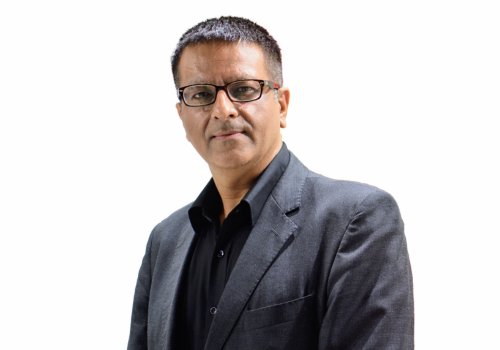
“Over the years, DMI has evolved from being just an exhibition to becoming a convergence point for the tooling ecosystem; It was a trade exhibition only earlier, and now it encourages cutting edge discussions through focussed business delegations, seminars and break-out opportunities during the main event. Participation has consistently helped move conversations from transactional to strategic. While immediate business outcomes are always welcome, the more lasting value comes to us from relationships built over time—with various stakeholders in the Tool and Die industry and policymakers”, says Vineet Seth, Managing Director – South Asia & Middle East, Mastercam APAC, in conversation with Neha Basudkar Ghate. This interview was taken for DMI 2026.
What key trends, challenges, or growth opportunities do you see in the Indian die and mould
industry today, and how might they evolve by 2026?
The Indian die and mould industry is at an interesting inflection point. On one hand, manufacturing volumes are growing steadily, driven by long-term demand. On the other, the nature of demand itself is changing rapidly. Consumers are influencing product design cycles in ways we had forecasted around 15 years back. Products are more personalised & trend-driven. For tooling, this translates into faster turnaround expectations, frequent design changes, and a stronger emphasis on value rather than just price.
Skill development is therefore no longer optional. The industry’s biggest differentiator over the next few years will be its ability to blend domain expertise with digital skills, whether in design, simulation, process planning, or shopfloor execution. Toolrooms that invest early in people, technology and workflows will cope far better with compressed timelines and rising complexity.
From a macro perspective, the growth drivers are strong and structural. India’s manufacturing sector is expected to grow at a healthy CAGR over the coming decade, supported by expanding defence production, infrastructure projects, metro and rail networks, EV adoption, space programs, and the rapid growth of civil aviation. Each of these sectors brings demanding tooling requirements and opportunities for capability upgradation.
The challenges however, remain real – raw material price volatility, global geopolitical uncertainty, and capital constraints are some of the key issues our toolrooms continue to face, and whether we like it or not, 2026 is a crucial year when we will start to see the industry separate into those who adapt proactively and those who struggle to keep pace. I’m particularly proud of the efforts that we are putting into skill development, from which I feel the Die and Mould industry will benefit immensely.
Which sectors (e.g., Automotive, EVs, Aerospace, Medical, Defence etc.) are driving demand for Dies and Moulds, and what opportunities do they present for the industry?
Demand for dies and moulds today is coming from almost every manufacturing sector, but the drivers are clearly different in nature. Automotive and EVs are the volume engines. What we are seeing right now—record bookings, strong response to new launches, frequent facelifts, and multiple model variants—directly benefits the die and mould industry. When vehicles like the Mahindra 7X0 series or the new Tata Sierra generate strong early traction through record bookings, it reflects consumer confidence and a market that is willing to spend. For toolmakers, this means sustained programs, tighter timelines, and repeated tooling requirements as OEMs refresh platforms and variants more aggressively than before. The increasing adoption of EVs further amplifies this trend, as EV architectures introduce new parts, materials, and packaging requirements that demand fresh tooling strategies.
Defence, aerospace, and medical bring a different kind of opportunity—quality and capability building. Volumes may be lower, but expectations are significantly higher. These sectors push the industry to think deeply about materials, manufacturing methods, validation processes, and documentation. The Aerospace and medical sector, in particular, forces innovation—whether in material selection, precision, or repeatability—often influencing best practices that later flow back into automotive and consumer tooling (which has been the trend, historically, too.).
Aerospace and defence add another important dimension: learning. They expose toolrooms to advanced technologies, supply chain & process discipline, and long-term program thinking. Over time, this elevates not just individual businesses but the overall maturity of the Indian die and mould ecosystem – a testimony any of us associated with this industry for the past 30+ years can give today.
White goods and consumer products add another important layer to this demand landscape. While margins and volumes differ from automotive or aerospace, this segment brings scale, speed, and cost discipline into sharp focus. Frequent model refreshes, cosmetic updates, and localization for price-sensitive markets drive steady tooling requirements translating into a strong emphasis on cycle-time optimization, surface quality, tool life, and rapid turnaround for Toolrooms. Over time, consumer tooling plays a quiet but critical role in building process robustness and execution discipline—capabilities that often become the foundation for scaling into higher-complexity automotive and industrial programs.
The Die-Mould Industry has evolved over the years typically by solving complex problems and as newer challenges come up, it continues to live up to its image through the combination of modern technology adaption and core tooling practices.
How is India’s manufacturing push (e.g., Make in India, China+1) impacting the die and mould sector overall?
India’s manufacturing push has moved well beyond intent and messaging—it is now influencing real decisions on capacity, localisation, and supply chains. It is expanding the opportunity space for the die and mould sector—but at the same time it is also accelerating the need for capability upgradation, skill development, and digital maturity. Initiatives like Make in India, supported by sector-specific incentives, have created a longer-term commitment to domestic manufacturing and for the die and mould industry, this has been quite significant.
Due to localisation pressure, OEMs and Tier-1 suppliers are increasingly expected to source tools, spares, and engineering capability closer to where production happens. This directly benefits Indian toolrooms, but it also raises expectations—on delivery timelines, process stability, quality systems, and lifecycle support. Therefore, the conversation has shifted from “Can you make this?” to “Can you make this consistently, at scale, and support it through the product lifecycle?”
The China+1 strategy adds another interesting layer. As global manufacturers diversify supply chains, India is emerging as a complementary manufacturing base rather than a replacement. This creates opportunities for Indian die and mould manufacturers to plug into global programs, provided they meet international standards on precision, documentation, and compliance. It is less about cost advantage now, and more about reliability, resilience, and engineering depth. It is time for Die and Mould manufacturers to break from their moulds and invest in innovation & reliability at a rapid pace to ensure that they get to ride on this bus!
What innovations or technologies (e.g., additive manufacturing, AI, simulations) are shaping the competitiveness of the die and mould industry?
Technology alone is not the differentiator anymore—how we think about using it is. Modern CAD/CAM systems have reached a level of maturity where real advantage comes from process integration and intent-driven workflows, not just software ownership or digital expansion. When design, simulation, manufacturing, and validation speak the same digital language, predictability improves and lead times reduce significantly.
Hybrid manufacturing is another important shift. The ability to combine subtractive precision with additive flexibility is opening new possibilities—be it in conformal cooling, repair and refurbishment of tools, or rapid prototyping of complex inserts. This is particularly relevant for tooling, where lead time and thermal performance directly impact both – part quality and ROI.
Equally important is a mindset change. Twenty-first-century manufacturing demands lateral thinking—encouraging young engineers to operate beyond traditional boundaries, question legacy practices, and experiment ‘responsibly’. Toolrooms that allow engineers to ‘fly outside the envelope’ are usually the ones that discover smarter processes rather than just faster machines.
There is also a dire need for cross-disciplinary talent in this domain. Recruiting from pure sciences—materials science, physics, applied mathematics—can significantly strengthen research and problem-solving capabilities in die and mould manufacturing. Add academic partnerships to this mix, and you have a defined way to address persistent bottlenecks such as material behaviour, wear, thermal distortion, and process variability. Let us not forget the competitiveness in a complex world, is usually not a single ingredient, but integrating technology, talent, and curiosity as an ongoing discipline.
What role do initiatives like precision manufacturing and talent development play in expanding the die and mould industry into new markets?
Precision manufacturing and talent development are foundational and not optional. Interestingly their real value lies not just in accuracy or efficiency—but in how people work together across domains and generations. The die and mould industry benefits immensely when deep domain knowledge is combined with cross-industry exposure. Engineers & technicians who understand automotive, defence, medical, or aerospace manufacturing bring different perspectives to the same problem, often leading to robust and unique solutions. Precision manufacturing becomes a natural outcome when experience is applied with intent, and not just matter-of-factly. Equally important is the blend of seasoned professionals and young engineers. When sage advice meets youthful energy with genuine desire to question the status quo, the work environment becomes charged in a positive way. Senior professionals provide context, judgement, and stability, while younger minds bring curiosity, digital fluency, and the courage to challenge legacy assumptions. This combination often results in breakthroughs that neither group could achieve in isolation – and to me, this is true talent development. (You will be surprised to see the seasoned professionals learn a thing or two, too!)
Such an environment also helps sustain a healthy ecosystem. It allows organisations to grow without losing continuity, encourages responsible risk-taking, and builds institutional knowledge rather than individual dependency. Over time, this strengthens not just individual toolrooms, but the industry as a whole—and by extension, the country’s manufacturing capability.
How has participating in past DMI exhibitions contributed to growth, networking, or collaborations within the tooling ecosystem?
Over the years, DMI has evolved from being just an exhibition to becoming a convergence point for the tooling ecosystem; It was a trade exhibition only earlier, and now it encourages cutting edge discussions through focussed business delegations, seminars and break-out opportunities during the main event. Participation has consistently helped move conversations from transactional to strategic. While immediate business outcomes are always welcome, the more lasting value comes to us from relationships built over time—with various stakeholders in the Tool and Die industry and policymakers.
What DMI enables particularly well is contextual networking. Discussions happen with a shared understanding of industry constraints—lead times, quality expectations, skill gaps, cost pressures—making conversations more meaningful and actionable. Many collaborations do not start as formal partnerships on the exhibition floor, but as technical discussions that mature into long-term engagements through collaborative problem solving.
For us, past DMI editions have also served as a listening platform. Feedback from the ground—whether from MSME toolrooms or large manufacturers—has influenced how we think about technology adoption, skill development, and ecosystem building. It helps validate assumptions and, equally importantly, challenge them with reasonable and collaborative solutions.
What makes DMI 2026 a valuable platform for the die and mould industry to showcase its strengths to domestic or global customers?
As I mentioned earlier, the die and mould industry is at an inflection point. The next phase of growth will be shaped by the technology choices and partnerships we commit to today. Decisions around digital workflows, hybrid manufacturing, and process maturity are no longer optional—they are strategic, and early movers will clearly have an advantage. What makes DMI relevant is that it allows the industry to learn not just from technology providers, but from peers facing similar challenges, helping avoid isolated or reactive investments. Equally important is the opportunity to forge partnerships—across toolmakers, OEMs, academia, and solution providers—because the complexity of modern tooling demands collaboration rather than siloed execution.
DMI also provides a collective voice to engage with policymakers, allowing the industry to articulate its needs from a broader economic and capability-building perspective. In that sense, to me DMI 2026 is not just a showcase—it is a platform to align the industry’s next steps with long-term national manufacturing goals.
What products, technologies, or launches are you planning to showcase at DMI 2026, and why are they significant for the industry?
At DMI 2026, our focus will be on demonstrating technologies that directly address the everyday realities of die and mould manufacturing. A key highlight will be EverPath, Mastercam’s next-generation approach to toolpath strategy. EverPath is designed to reduce the dependency on manual parameter tuning by making toolpath behaviour more intelligent and predictable by default. For die and mould manufacturers, this means more consistent outcomes, reduced programming variability, and faster decision-making—especially valuable in environments with frequent design changes.
We will also showcase Mastercam Copilot, an AI-enabled assistant built into Mastercam. Copilot is aimed at improving productivity and lowering learning curves by providing contextual guidance and command assistance directly within the software—helping teams work faster without compromising on process discipline.
We will be also showcasing Mastercam Deburr, which addresses one of the most time-consuming and underestimated challenges in tooling: edge finishing. By automating deburring and edge treatment, it helps reduce manual bench work while improving consistency and repeatability.
Alongside these, enhancements in dynamic milling, finishing strategies, and verification performance continue to strengthen Mastercam’s relevance for high-precision mould and die applications.