

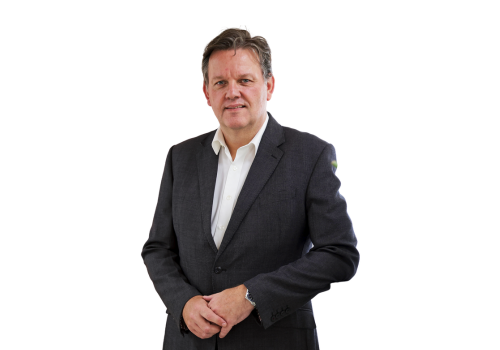
“India’s die and mould industry has extraordinary potential. What excites us most is the mindset shift we’re seeing, teams want smarter processes, not just better machines. At Renishaw, our role is simple: help toolmakers build accuracy into their process, not inspect it later. With simple automation and dependable process control, India is well on its way to becoming one of the world’s most trusted tooling destinations,” says Paul Weaver, Director Sales and Marketing, India. This interview was taken for DMI 2026.
What key trends, challenges, or growth opportunities do you see in the Indian die and mould industry today, and how might they evolve by 2026?
The Indian die and mould industry is standing at one of its most defining moments. As manufacturing scales up, especially in sectors like EVs, electronics and precision components, expectations from toolmakers have shifted quickly. Accuracy, repeatability and shorter development cycles are now basic requirements. What we see across die‑casting, injection moulding and machining is the same pattern: customers want process control directly on the shopfloor, not only in the inspection room. They want confidence that the part coming off the machine is correct the first time.
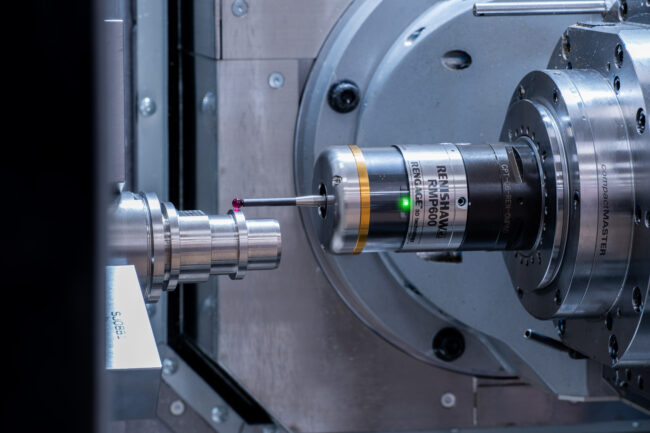
This is where simple automation becomes important. Practical tools like machine tool probing, shopfloor gauging with systems such as the Equator™, and regular machine calibration using technologies like the XM‑60, give toolmakers stability and predictability without adding complexity. These steps reduce trial‑and‑error and build trust into the process. By 2026, this level of process control won’t be optional, it will be essential.
Which sectors (e.g., Automotive, EVs, Aerospace, Medical, Defence etc.) are driving demand for Dies and Moulds, and what opportunities do they present for the industry?
The strongest pull is coming from Aerospace & Defence, complex metal parts where repeatability and documentation matter. Automotive & EVs, rising with more aluminium die‑cast parts, lightweight structures, and tighter tolerances. Electronics, high‑volume plastic parts and small precision components that need consistent mould performance. Medical devices steadily demand high-precision moulds with traceability.
What all these sectors want is accuracy and speed, which places huge value on technologies that give toolmakers consistent, data‑backed control over their machining and moulding processes.
How is India’s manufacturing push (e.g., Make in India, China+1) impacting the die and mould sector overall?
Government initiatives have opened the door for Indian suppliers, but they’ve also raised the bar. OEMs now look for local capability matched with global standards.To win this business, toolrooms must be able to show calibrated machines, proving the machining capability, stable, repeatable processes, and shop floor inspection, showing parts validated immediately after machining OEMs are increasingly willing to source tooling in India, but only if the process is predictable. This is pushing toolmakers to modernise, automate, and invest in the right technologies to compete globally. Renishaw’s solutions support exactly this transition, helping teams demonstrate capability, not just capacity.

What innovations or technologies (e.g., additive manufacturing, AI, simulations) are shaping the competitiveness of the die and mould industry?
This is where Renishaw solutions play a powerful role.
- Machine tool probing prevents errors at the source
- Equator™ gauging provides rapid, repeatable shopfloor measurement
- XM‑60 multi‑axis calibration ensures machines perform reliably every day
Together, these tools help manufacturers measure, correct, and control processes in real time.
What role do initiatives like precision manufacturing and talent development play in expanding the die and mould industry into new markets?
To compete globally, Indian toolrooms need, repeatable precision backed by data and skilled technicians who understand machining, metrology, and process control. We see huge gains when teams learn how to use technologies like probing, shop floor gauging, encoder feedback systems, and machine calibration tools. These skills build customer confidence because they show that the toolmaker isn’t just relying on experience, they’re proving accuracy with numbers.

How has participating in past DMI exhibitions contributed to growth, networking, or collaborations within the tooling ecosystem?
India’s die and mould industry has extraordinary potential. What excites us most is the mindset shift we’re seeing, teams want smarter processes, not just better machines. At Renishaw, our role is simple: help toolmakers build accuracy into their process, not inspect it later. With simple automation and dependable process control, India is well on its way to becoming one of the world’s most trusted tooling destinations. When customers see live demos, they click instantly. These exhibitions help us listen, share practical solutions and form stronger connections with OEMs and MSMEs. More importantly, they reflect a shift we’re seeing across the industry.
What makes DMI 2026 a valuable platform for the die and mould industry to showcase its strengths to domestic or global customers?
DMI is special because it brings the entire tooling community together. Toolmakers, OEMs, moulders, designers, everyone who cares about precision is there under one roof. For Renishaw, it’s the right platform to demonstrate simple, practical technologies that immediately help toolrooms improve accuracy and productivity. And for visitors, it’s a chance to see what’s possible right now, not years away.
What products, technologies, or launches are you planning to showcase at DMI 2026, and why are they significant for the industry? (Please share the description of the product and share product image.)
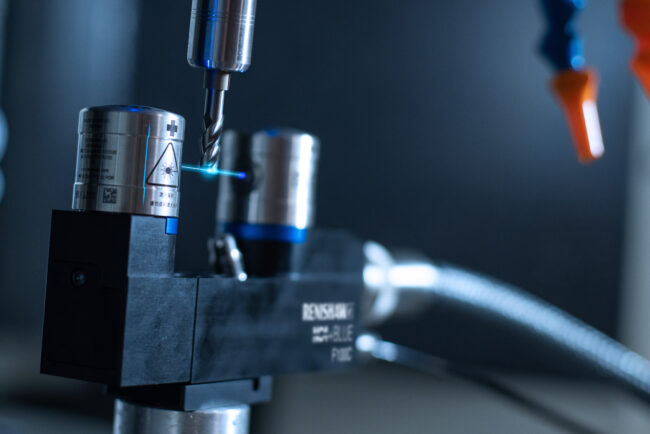
At DMI 2026, we’re bringing solutions that make shopfloor process control simple, a ccomprehensive range of probing and tool measurement systems for CNC machine tool which are designed to improve machining accuracy, through Digital interactive display (DID). The DID will provide a hands-on experience, to educate our visitors on the need for probing systems in their CNC machines and machine calibration and otpimisation. With the right tools on the shopfloor, backed by the right training and mindset, Indian toolmakers can deliver global‑quality tooling with greater speed, consistency, and confidence than ever before. That’s the journey Renishaw is committed to, making precision practical, accessible, and scalable for every toolroom in India.
Our message for DMI 2026 is simple: precision doesn’t have to be complicated. With the right tools on the shopfloor, Indian toolmakers can deliver global‑quality work, faster and more consistently than ever before. We’re here to help make that journey practical and achievable.