
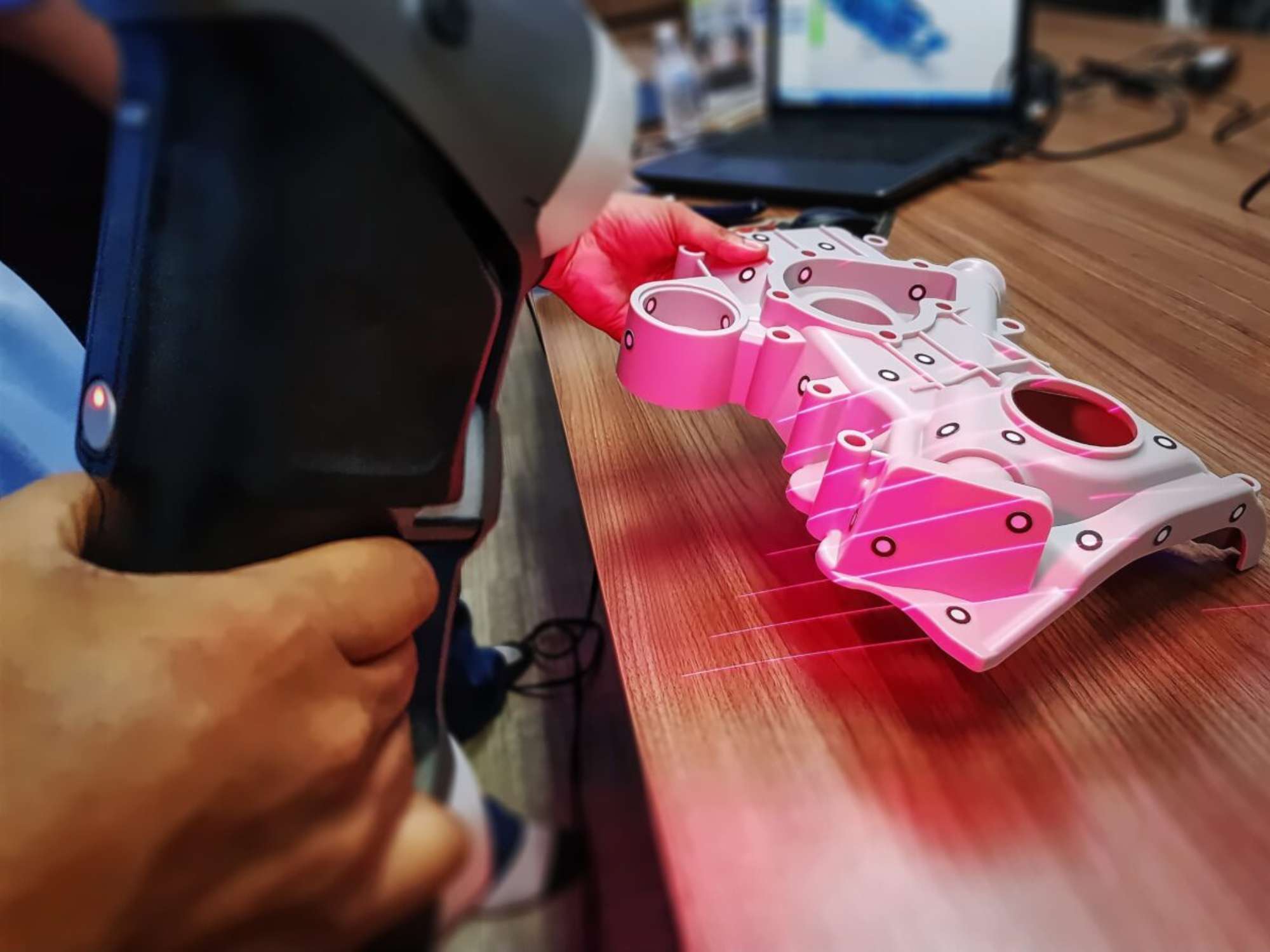
Soon there will be a conversation happening in every mould making shop floors including India, which hasn’t been said out loud yet. It will start with someone seeing a headline “AI takes over CAD design” and ends with a nervous laugh and a return to the screen. I want to address that conversation honestly, because I think the fear is misplaced, and the real story is far more interesting.
Let me be clear from the start: Autodesk Fusion has announced the integration of Claude into Fusion. It is not primarily coming for your job. But it is definitely coming for your Tuesday afternoon.
The Real Threat Was Never the Tool
Designing a mould is not a mechanical act only. It is a craft built on years of failures and lessons from a gate that burned, a part that warped, or a steel batch that didn’t clean up properly. That institutional knowledge lives in people, not in software. No language model, however capable, walks into a tool room and feels the drag on a polished cavity. That remains yours, at least as of now.
What “AI in Fusion” does target, and quite effectively, is the distance between a design intent and a finished, validated manufacturable 3D model. That distance filled today with repetitive commands, manual checks, and iteration cycles is where most of the hours disappear. And for most mould designers, that is where the frustration lives too.
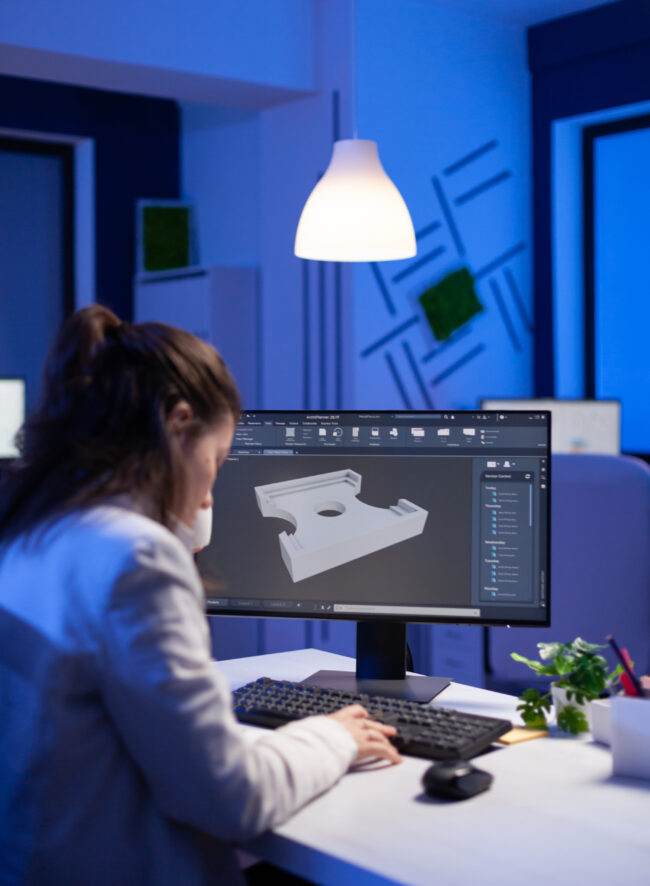
The TAT Problem Is Real but Solvable
Turn-around time for the CAD stage of mould design has always been the bottleneck nobody talks about loudly enough. A component comes in. DFM review begins. Red flags are raised. Changes go back to the product team. The geometry comes back modified sometimes better, sometimes with new problems. Then the actual mould design work starts: core and cavity split, sliders, lifters, cooling channels, runner system, ejection strategy. Easily two to four weeks on a complex tool, sometimes more.
Now Claude operating inside Fusion has the potential to compress that cycle dramatically, not by doing the thinking, but by eliminating the mechanical overhead around the thinking. Imagine describing your parting strategy in plain conversational language and watching the model interrogate the geometry for undercuts, flag problem faces, and propose a preliminary split surface in minutes, not hours. The designer still reviews, still decides, still overrides. But the starting point is further along.
In the trial phases, gains will be modest. The prompting will need refinement. Trust in the AI’s output will need to be built through verification. But as that calibration matures, the TAT for a standard injection mould CAD package could realistically shrink by thirty to fifty percent if implemented rightfully.. That is not a small number.
DFM Experts Become Exponentially More Valuable
Here is the shift that I think most people are missing: when AI handles execution speed, the value of strategic judgment rises, not falls.
A DFM expert, someone who can read a part and immediately understand how the polymer will flow, where sink will appear, why that rib proportion will cause a problem three months after production starts, that person becomes the essential interface between the AI and the outcome. They are the one who knows whether to trust the gate location the model suggests, or whether the fill analysis is telling only half the story.
The designers who will struggle are not the experienced ones. They are the ones who were relying on repetition and template-following rather than understanding. Simply put, like every other industry, even for mould makers, AI in CAD workflows will accelerate knowledge. It does not manufacture it.
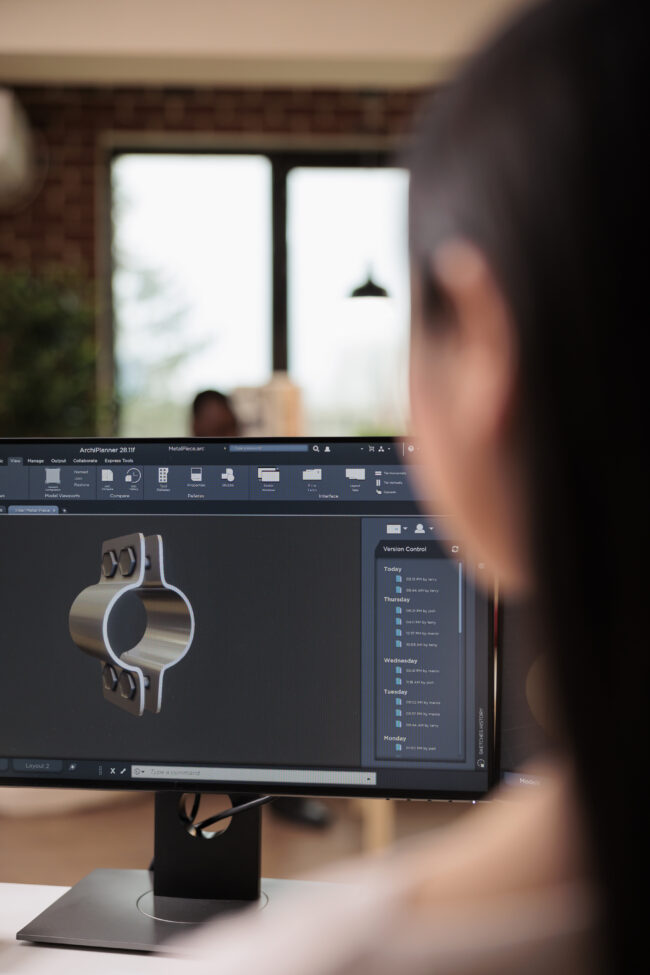
Where the Technology Gets Genuinely Exciting
Beyond the TAT of a CAD, the integration opens doors that were practically closed before, not because the engineering was unknown, but because the exploration cost was too high.
Gate strategy testing is one example. Optimising gate location, type, and count on a complex multi-cavity tool is an iterative analytical exercise that most projects don’t have the schedule to run properly. With “AI in Fusion”, a designer could rapidly generate and compare multiple gating scenarios: fan gates versus submarine gates versus hot tip, against fill, weld line position, and cosmetic surface impact, in a fraction of the time compared to what it would take manually.
Cooling channel design is another frontier. Conformal cooling is often discussed and rarely implemented because the design time doesn’t fit the budget. AI-assisted geometry generation for conformal channels, integrated directly into the mould design environment, changes that calculus entirely.
Complexity ceiling lifted. There are mould designs that don’t get built as designed because the CAD effort to prove them out is simply too expensive relative to project value. Collapsible cores, internal threading mechanisms, multi-action slides, these become more accessible when the design iteration cost drops.
What This Actually Means
We are early.
The possibility of what Claude and Fusion can do together is still being understood, still being explored. The first tools will be imperfect. The outputs will need checking. Some prompts won’t land the way you expect.
But the direction is unmistakable. The mould makers who engage with this technology now, the ones who learn its language, who push its limits, who build the intuition for when to trust it and when to override it, will be the ones setting the pace two years from now.
The job is not disappearing. It is changing shape.
And if anyone understands changing shape, it’s a mould maker.