


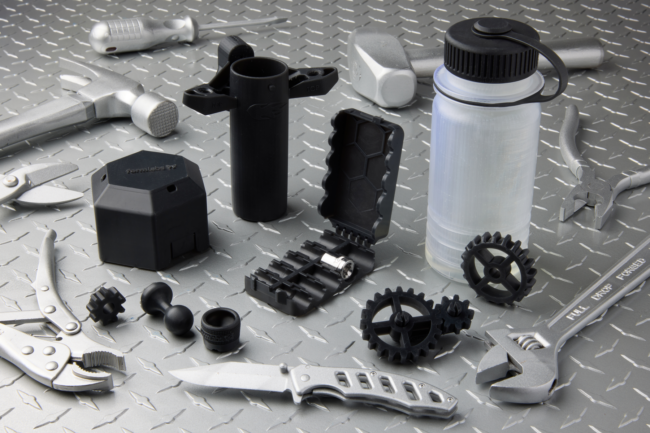
Once primarily known for prototyping, additive manufacturing is now driving innovation across aerospace, automotive, healthcare, and industrial tooling by enabling designs and efficiencies that conventional methods struggle to deliver. As the technology moves from experimentation to production, manufacturers are discovering where it creates the greatest competitive advantage. The challenge now is not adoption, but building the ecosystem needed to scale its promise.
-Neha Basudkar Ghate
It is said that every revolution begins where tradition meets its limits. For decades, the tooling industry has relied on moulding, forming, and CNC machining to deliver precision, durability, and scale. These processes remain the backbone of manufacturing, particularly where cost efficiency and repeatability are paramount. By enabling complex geometries, conformal cooling, and lightweight structures, Additive Manufacturing (AM) has introduced a new dimension here. It makes possible what conventional manufacturing methods often find difficult to achieve. The real question, however, is not whether AM is ‘better’ than conventional tooling, but where it is better suited. In a high-volume production environment, CNC machining and moulding continue to dominate. But in low-volume, high complexity, or customisation-driven applications, AM offers unmatched flexibility. The industry is learning to balance these strengths, treating AM not as a replacement, but as a complementary force that expands the boundaries of what tooling can deliver.
Subtractive vs. Additive Manufacturing in Tooling
In manufacturing, tooling plays a critical role in ensuring product quality and production efficiency. As the backbone of manufacturing operations, tooling often involves complex, low-volume components such as moulds, dies, jigs, fixtures, inserts, and robotic end-effectors. Producing these can be time-consuming and costly, particularly when designs are intricate or modifications are required.
While tooling components have traditionally been manufactured using subtractive methods such as CNC machining, AM addresses many of these challenges by enabling the production of complex geometries with greater design flexibility, reduced lead times, and lower material waste. As a result, industries such as automotive, aerospace, healthcare, and industrial manufacturing are increasingly integrating AM into tooling applications ranging from moulding and casting to forming, machining, assembly, inspection, and robotics.
From Experiment to Ecosystem
The growing adoption of AM in tooling reflects a broader shift across the manufacturing industry. Once regarded primarily as a prototyping technology, AM is now being used to address production challenges related to design complexity, lead times, customisation, and supply chain flexibility. As AM moves into mainstream industrial applications, companies are increasingly evaluating it not as an alternative to conventional manufacturing, but as a strategic technology that can create measurable business value.
Industry leaders believe this transition is accelerating as organisations identify practical use cases across aerospace, tooling, automotive, and healthcare, among other sectors.
The real conversation today is no longer about whether AM works, but about where it delivers the greatest advantage, notes Judit Piukovics, GM, APAC, Formlabs. “The conversation around additive manufacturing has changed significantly over the last few years. Earlier, companies were asking whether the technology works. Today, the discussion is about where it creates the strongest business advantage,” she says.
“India is particularly interesting because the market combines strong engineering capability with a highly cost-conscious manufacturing environment. That pushes companies to look for technologies that improve efficiency, reduce dependency on tooling, and accelerate product development without massive capital investment,” Piukovics adds.
Industries Adopting Additive Manufacturing
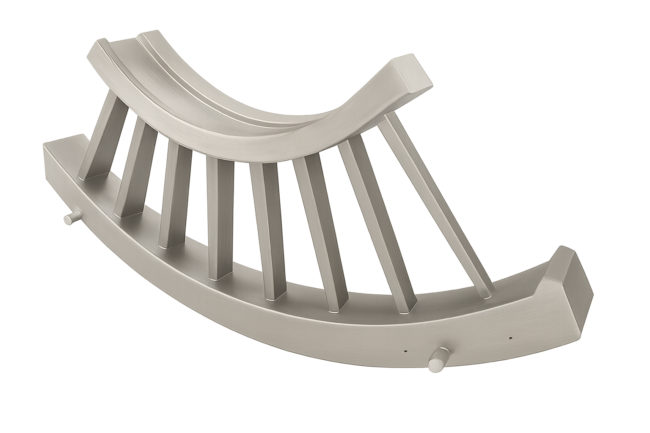
These drivers are accelerating the adoption of AM in industries where conventional manufacturing methods struggle to balance complexity, cost, and speed. In India, AM has shifted from prototyping to qualified production in sectors such as aerospace, says Ankit Sahu, CEO and Founder, Objectify Technologies Pvt. Ltd. “Components where conventional methods struggle with weight, lead time, or complex geometry, like fuel system parts, heat exchangers, structural brackets, and increasingly hot-section engine components, are leading the adoption,” he elaborates.
“The bigger shift is structural. ISRO, DRDO, HAL, and private aerospace primes now treat additive manufacturing as a serial production route, not an experiment. That changes the economics for indigenous platforms like UAVs, missiles, and space propulsion, where weight savings translate directly into payload and range,” notes Sahu.
Beyond aerospace, the practical impact of AM is equally evident in tooling. Aditya Kumar, Managing Director, Marcopolo Products Private Limited, highlights, “From the point of view of tooling in injection moulding, additive manufacturing of metal is extensively used for the benefit of conformal cooling channels. It is also used for expensive aerospace spare parts where conventional tooling techniques would be expensive for low volumes.”
Market Projections and Challenges Preventing Scale
According to Coherent Market Insights, the Global Additive Manufacturing Market is expected to be valued at USD 31.48 billion in 2026 and reach USD 114.45 billion by 2033, exhibiting a CAGR of 24% from 2026 to 2033. The Indian Additive Manufacturing market is forecast to grow at a CAGR of 22.9%, reaching USD 1.4 billion in 2031 from USD 0.5 billion in 2026, states a Research and Markets report.
While these market projections indicate significant momentum for AM worldwide and in India, industry leaders believe that market growth alone will not guarantee long-term competitiveness. The focus must now shift from expanding capacity to building a robust ecosystem that will support large-scale adoption.
Sahu aptly points out, “We cannot win on machine count alone — global capacity is being added at a pace we will not match through CapEx. The Indian position must be built on four fronts, which include material qualification, indigenous powder production, certification infrastructure and industry-academia collaboration.”
Beyond ecosystem development, operational challenges continue to influence the pace of AM adoption in India. Kumar highlighted the gaps that need to be addressed for large-scale adoption in India. “The ecosystem of materials/machine maintenance and skilled manpower is still not in place for manufacturing at scale. All materials and machine spares still need to be imported at high costs. Some skill sets are also still being imported,” he explains.
There’s a need for “policy decisions to reduce customs duties to reduce costs. Indigenous manufacturing will need to develop to offset the dependence on imports,” he adds.
The Next Phase of Adoption
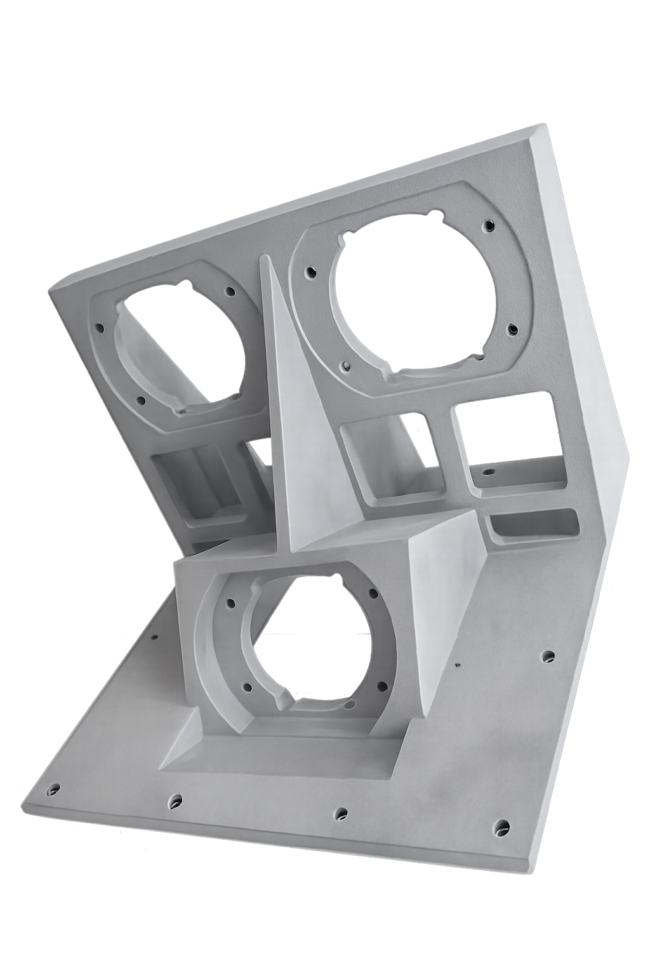
Despite these challenges, the market outlook indicates that AM is steadily moving beyond experimentation and becoming an integral part of manufacturing strategies. According to Piukovics, future growth will be driven by practical business outcomes rather than technology adoption for its own sake. “The next phase is operational adoption. For that to happen, manufacturers need three things: reliability, workflow simplicity, and measurable business impact. Companies do not adopt additive manufacturing because it is innovative. They adopt it because it solves a production problem, reducing lead times, lowering tooling costs, accelerating iteration cycles, or improving flexibility,” explains Piukovics.
The Generative Design Advantage
Recent research published in Springer Nature on ‘Mass Customisation Through Additive Manufacturing: Review of Technologies, Applications, and Scalability Challenges’ highlights how AM is increasingly enabling manufacturers to combine design freedom, material efficiency, advanced material development, and mass customisation within a single production ecosystem.
The study states that AM allows the production of complex and customised geometries with minimal tooling, reduced setup times, lower material waste, and greater flexibility compared to conventional manufacturing processes. At the same time, continuous advancements in metal alloys, polymers, and production technologies are expanding the use of AM across aerospace, healthcare, consumer products, and industrial applications, accelerating its transition from prototyping to scalable end-use production.
One of the key enablers of these advantages is generative design, which leverages advanced algorithms to create optimised component geometries that would be difficult or impossible to manufacture using conventional methods. By reducing unnecessary material while maintaining functional performance, generative design is helping manufacturers fully capitalise on AM’s potential for lightweighting, resource efficiency, and design optimisation.
What is Generative Design?
- Generative Design is a design exploration process where software generates multiple design alternatives based on defined constraints and objectives.
- Engineers specify what the design must do (requirements), where material can and cannot exist (design space), and manufacturing considerations; then algorithms generate solutions that meet those criteria.
Kumar said, “Generative design will help in improving lightweighting and in reducing waste. This is one of the key benefits of additive manufacturing. This leads to further improvement in waste reduction, as only the amount of materials needed is used in the manufacturing.”
Materials Expanding Possibilities
The growing availability of advanced materials is also widening the range of applications that can be manufactured additively, particularly in performance-critical industries. Sahu states, “In nickel alloys, the shift from standard grades to high-temperature variants is opening hot-section turbine applications that were previously off-limits to printing. In aluminium, new high-strength grades are entering aerospace and motorsport applications where weight is critical. For thermal management, rocket chambers, EV power electronics, induction tooling and copper-based alloys have crossed into production. On the polymer side, qualified materials are now serviceable for end-use parts in aircraft interiors, UAV airframes, and medical devices.”
The Mass Customisation Advantage
These developments are also strengthening AM’s value proposition for customised production, where traditional manufacturing often struggles to balance personalisation and cost.
Piukovics states, “Mass customisation is one of the areas where additive manufacturing has a structural advantage over traditional manufacturing. In conventional production, customisation increases complexity, and complexity increases cost. Additive manufacturing breaks that relationship because producing one customised part versus another often requires no tooling change at all. That completely changes the economics of personalisation.”
Towards Industrial Maturity
The future of AM will be shaped by advances that improve productivity, consistency, and scalability. As technologies mature across hardware, software, and process control, manufacturers are increasingly looking beyond prototyping and focusing on how AM can support larger production volumes, stricter quality requirements, and more demanding industrial applications.
Reflecting on the technological developments that are expected to drive this next phase, Sahu believes that the industry’s progress will be defined not only by advances in machine capabilities but also by improvements in process intelligence, digital traceability, and application-specific demand.
“In hardware, machines with multiple lasers are becoming standard rather than premium, which lowers cost per part and makes serial production viable. Larger build sizes and complementary processes like binder jetting and directed energy deposition will broaden what printing can address, particularly for large structural parts and repair work on high-value components,” he elaborates.
According to Sahu, this shift in hardware is being matched by advances in process control. “Real‑time monitoring combined with machine learning is moving from research into production. Closed‑loop systems that adjust parameters automatically based on sensor feedback are the natural next step,” he says.
These developments show how AM is steadily moving towards industrial maturity, where consistency and automation define competitiveness.
Software, too, plays a critical role. Sahu emphasised, “Linking design data, machine parameters, sensor records, and inspection results to each part’s serial number is what will let printing scale into regulated industries.” By embedding traceability into every stage, AM can meet the stringent requirements of aerospace, medical, and energy sectors.
Finally, he underlined the bigger picture: “Beneath all of this, additive manufacturing in India will increasingly be defined by the sectors pulling on it — space launch, UAVs, gas turbines, EV thermal management, and medical implants. The applications are setting the agenda.”
Building the Ecosystem for the Next Phase
While Sahu highlights how advances in hardware, process control, and software are pushing additive manufacturing toward industrial maturity, Piukovics reminds us that technology alone is not enough — the long‑term success will depend on the ecosystem of education, collaboration, and policy that surrounds it.
Piukovics explains, “The long‑term success of additive manufacturing will depend less on the machines themselves and more on the ecosystem around them.”
Sahu emphasised, “The first priority is education. Not just machine operation, but design thinking. The second is industry collaboration. Policy support also plays an important role.”
These elements are what will allow India to leverage its strengths, Sahu said, adding, “India is in a strong position because it already has several key ingredients, engineering talent, entrepreneurial manufacturing culture, growing digital adoption, and strong demand for localised production capabilities.”
Looking ahead, Piukovics stressed the importance of scale. “The next stage of growth will come from moving additive manufacturing from isolated innovation teams into mainstream manufacturing operations. Once this transition happens, the impact on product development, supply chain flexibility, and manufacturing competitiveness will be significant.”

COMMENTS