
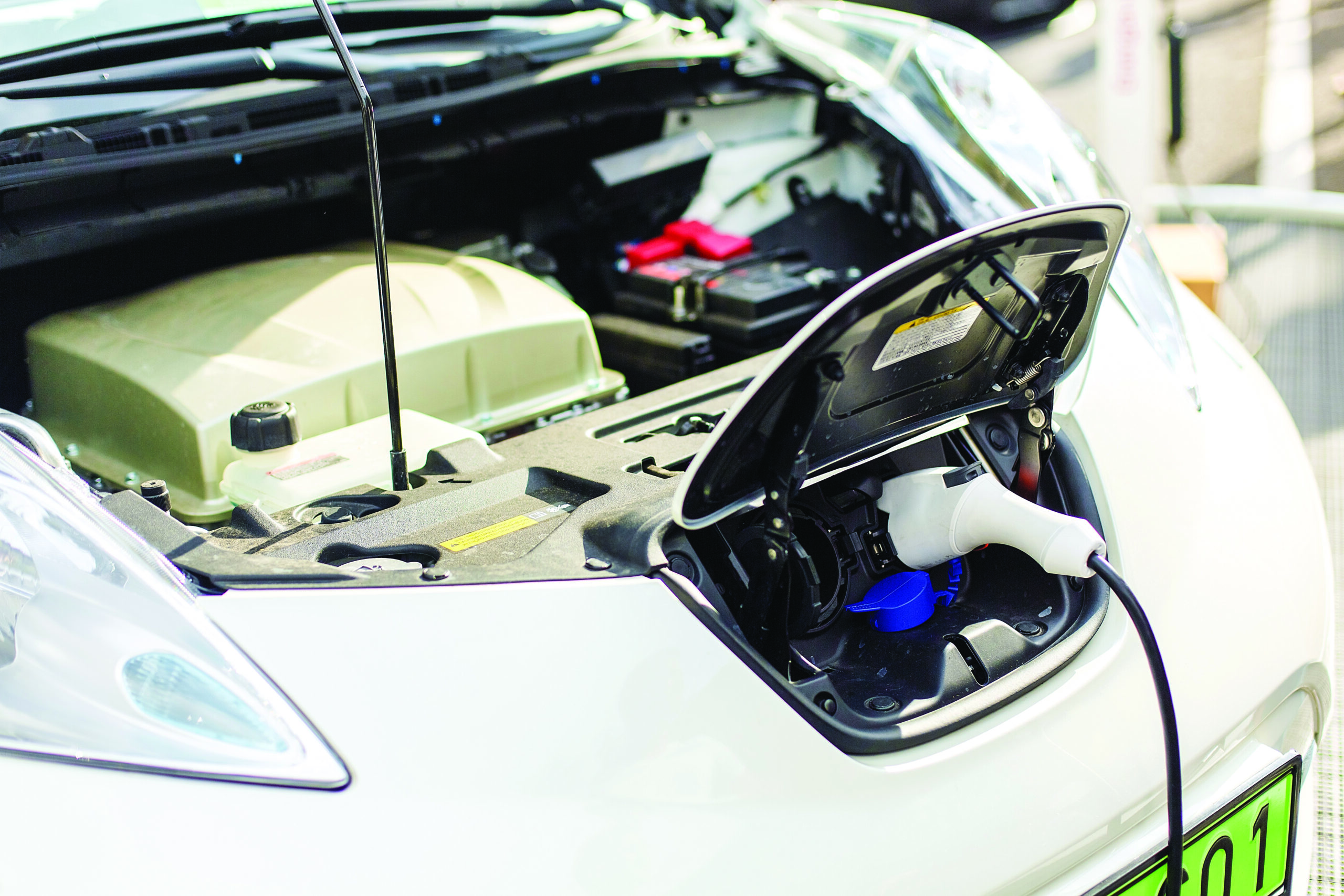
The shift to electric mobility is changing the requirements for automotive tooling, with tighter tolerances, advanced materials and greater demands for repeatability becoming increasingly important. For India’s die and mould industry, the transition presents an opportunity to strengthen capabilities in precision tooling, simulation and advanced mould design as EV production scales.
The automotive industry is standing at a decisive crossroads, where the legacy of internal combustion engines meets the accelerating momentum of electric mobility. As manufacturers reimagine platforms and supply chains, the shift is not only about propulsion systems but also about the deeper transformation of design, tooling, and production philosophies. Electric Vehicles (EVs) demand a new level of precision, integration, and adaptability, reshaping the way the industry approaches engineering and manufacturability.
This transition is forcing toolmakers, component suppliers, and OEMs to rethink long established practices. The rise of EV platforms introduces new challenges in materials, tolerances, and lifecycle expectations, requiring a sharper focus on innovation in design and production. Unlike conventional automotive systems, EV architectures emphasise compactness, efficiency, and reliability, placing unprecedented demands on tooling strategies and manufacturing consistency. Ultimately, the industry’s ability to adapt will define its competitiveness in the coming decade.
At the same time, the EV ecosystem is evolving rapidly. From battery housings and connectors to lightweight structures, every element of the vehicle is being scrutinised for performance, safety, and scalability. This is not just a technological shift but also a cultural one, where “first-time-right” quality, sustainability, and global standardisation are becoming non-negotiable. The convergence of advanced materials, digital simulations, and high-volume production techniques is setting the stage for a new era in automotive manufacturing, one that demands resilience and foresight from every stakeholder across the value chain.
Global EV Market Gains Momentum
According to a Coherent Market Insights report titled, ‘Electric Vehicle Market Size And Share Analysis – Growth Trends And Forecasts (2026-2033)’, the global EV market is expected to be valued at USD 495.30 billion in 2026 and reach USD 837.93 billion by 2033, exhibiting a compound annual growth rate (CAGR) of 7.8% from 2026 to 2033. Based on vehicle type, the passenger vehicles segment is expected to lead with a market share of 73.4% in 2026. Based on propulsion technology, Battery Electric Vehicles (BEVs) segment is projected to dominate the market, holding a 68.8% share in 2026. Regionally, Asia Pacific is expected to lead with a 65% market share in 2026, while Latin America is projected to be the fastest-growing region, accounting for a 4.8% share in 2026.
Another report by India Brand Equity Foundation (IBEF), a trust established in 1996 by the Department of Commerce, Ministry of Commerce and Industry, Government of India, states that, India’s EV market recorded its highest-ever monthly sales in July 2026, with registrations across all vehicle categories rising over 66% year-on-year to around 3.30 lakh units, compared with just under 2 lakh units in July 2025. The milestone was driven by robust growth in the electric two-wheeler (e-2W) segment, which crossed the 2 lakh monthly registration mark for the first time, supported by elevated fuel prices, a wider range of EV models and an expanding dealer network. According to Vahan data, EV registrations had already reached 3.10 lakh units in June 2026, reflecting sustained momentum in electric mobility adoption across the country. The strong performance underscores the growing acceptance of electric vehicles among consumers and reinforces India’s position as one of the world’s fastest-growing EV markets.
The IBEF report further states that the continued expansion of India’s EV ecosystem is being supported by improving charging infrastructure, increasing product availability and rising consumer confidence in electric mobility. The record growth across vehicle segments highlights the accelerating transition towards cleaner transportation and reduced dependence on conventional fossil fuel vehicles. Industry stakeholders expect the sustained momentum to further strengthen domestic EV manufacturing, encourage investments across the value chain and support India’s long-term sustainability and energy transition goals. The milestone also reflects the increasing contribution of electric mobility to the country’s automotive sector and its broader objective of building a globally competitive clean mobility ecosystem.
Precision at the Core of EV Manufacturing
As the automotive industry pivots towards electrification, the spotlight is increasingly on the unseen backbone of production, tooling and mould design. Beyond the buzz around batteries and propulsion systems, the ability to consistently deliver high-quality components defines the credibility of EV platforms. For manufacturers, this is not just about keeping pace with innovation but also about ensuring that every part aligns with the uncompromising standards of modern mobility.
Santosh Kulkarni, Vice President, Bajaj Auto Ltd., explains, “Tool requirements are defined by the complexity and accuracy of the component design. So whether it is ICE or EV, the driving factor is the complexity and accuracy. Powertrain in EV is usually of tighter tolerance than in ICE and the materials are of high performance range.”
He adds that the product life cycle for EV platforms is typically shorter, making tool life an important consideration. The critical challenge is to deliver every part with the same level of accuracy and reliability. Battery housings, for instance, have complex constructions due to the integration of several components, while also requiring very tight tolerances. This makes mould construction very complex and demands robust tooling to maintain consistent quality throughout production. The durability will ultimately be defined by the robustness of mould construction.
While Kulkarni underscores the growing complexity of tooling requirements for EV platforms, the broader industry context highlights why these challenges are so critical. India’s EV manufacturing ecosystem is evolving rapidly, with components localisation, advanced die simulation, and material innovation becoming central to competitiveness. The Institute for Energy Economics & Financial Analysis reports highlight that EV-specific systems beyond batteries such as motors, power electronics, and thermal systems are increasingly being manufactured domestically, although bottlenecks remain in areas like automotive chips and rare-earth magnets. This shift is reshaping the value chain, moving it away from traditional metal-based components towards sophisticated electronic systems and advanced assemblies.
Building Robust EV Components
As EVs move towards mainstream adoption, the focus is shifting from prototypes to scalable production. This transition demands not only innovation in design but also uncompromising reliability across every component. From battery housings to connectors, the industry is under pressure to deliver parts that meet stringent performance, safety, and durability standards while enabling high-volume manufacturability. The challenge lies in balancing the use of advanced materials with precision tooling, ensuring that every unit performs consistently under demanding conditions.
It is in this context that the perspective of Ravindra Gugale, Central Purchase, TATA AutoComp Systems Ltd., gains significance. His emphasis on “first-time-right” quality and advanced tooling reflects the industry’s need to eliminate inefficiencies as production volumes rise. As the Institute for Energy Economics & Financial Analysis reports state, with India’s EV market growing nearly 14-fold since FY2020, the pressure on suppliers to deliver precision, durability, and scalability has never been greater.
Gugale elaborates, “Designing all the needed tools for thin wall parts made in high-strength steel, aluminium, and composite material are a must. To achieve this perfect tool design, simulation is a must. Part production of mass volume is needed so the tool wear and tear, breakdown, etc. is minimum. Any sort of post operations for part dimension correction, rework is not at all accepted by customer. First-time-right quality is a must.”
On this, Gugale emphasises that, “Dimensional accuracy, safety, sealing, thermal management, electrical performance, and high volume manufacturability are all non-negotiable. Battery housings are typically complex stamped parts made from aluminium, high-strength steel or mixed materials, involving deep draw, free of wrinkles, no spring back and no surface defects. To achieve this, advanced die simulation, compensation, dimensional consistency, zero burrs, and flange integrity must be maintained— because at the end, gas leak tightness is a must.”
Speaking about connectors, Gugale added that the requirements are even more precise: “They work on high current, high voltage, and data communication signals. These need micro-precision stamping using copper, brass, and other high conductivity alloys. At present, most of these are imported, but we need standardisation in our industry so they can be made in India. That would not only improve volumes but also open up export opportunities.”
Supply Chain and Localisation Challenges
India’s push to localise EV battery production faces significant hurdles in cell components, equipment manufacturing, and access to critical minerals. Studies note that China’s dominance in raw materials and rare earth magnets creates long-term risks for India’s supply chain. To build a competitive domestic ecosystem, the country must invest in skilled labour, advanced testing facilities, and indigenous R&D. Policy frameworks such as the Production Linked Incentive (PLI) Scheme are helping, but execution challenges and uneven disbursement of funds have slowed progress. Without deeper localisation of upstream technologies, India risks continued dependency on imports for key battery and tooling systems.
Cooling, Connectivity, and Consistency
As EVs move deeper into mainstream adoption, the technical challenges extend far beyond propulsion systems. Industry reports highlight that thermal management and dimensional stability are among the most critical factors shaping EV reliability. From advanced mould cooling systems to precision stamping for connectors, the demands on tooling and design are intensifying. Global studies point out that innovations such as 3D cooling channels, beryllium copper alloys, and advanced die simulations are increasingly being deployed to ensure repeatability and reduce variability in production. These technologies are not just incremental improvements; they are becoming essential enablers of high-volume EV manufacturing.
Kulkarni explains, “Overall, as mentioned earlier, the need for tighter tolerances is higher in EV parts, and consistency can be brought about by mould design. The cooling/ heat removal mechanism has to be built in a way that can maintain near equal temperature across the mould, thereby allowing the shrinkage to occur with the least variability. The lesser the difference, the better will be the differential shrinkage, allowing better dimensional stability and repeatability. There are several other factors, but the cooling system is very important. That’s the reason 3D cooling, beryllium copper, etc. have become very popular.”
Bridging this perspective, Gugale draws attention to the broader system-level requirements. He says: “The battery pack needs the best thermal management performance, electrical connectivity, sealing against moisture and dust, crash safety, lightweight structures demanding tighter dimensional control, and consistent dimensions for repeatable robotic assembly. All this has to be achieved through perfect die and mould design, with part-after-part perfect dimensions without any rework or post correction work.”
Together, these insights underscore a common theme: precision and reliability are non negotiable in EV manufacturing. Whether it is cooling systems that safeguard dimensional stability or connector tooling that ensures flawless electrical performance, the industry’s future rests on its ability to integrate advanced design, tooling, and simulation into every stage of production. As India positions itself as a global hub for clean mobility, these technical foundations will define not just the success of individual companies, but the credibility of the country’s EV ecosystem on the world stage.
Conclusion: Precision and Scale Define the EV Future
The automotive industry has reached a decisive turning point, where electrification is reshaping not just propulsion systems but the very foundations of manufacturing. Market insights show strong global momentum, with Asia Pacific and India leading adoption. Expert voices from Kulkarni and Gugale highlight the technical realities behind this growth.
Kulkarni’s focus on tighter tolerances and advanced cooling systems underscores the importance of dimensional stability and repeatability in EV tooling. Gugale’s emphasis on thermal management, electrical connectivity, and “first-time right” quality expands the lens to system-level reliability and scalability. Together, their perspectives converge on a single theme: precision and reliability are non-negotiable.
India’s EV ecosystem is evolving rapidly, supported by localisation efforts, policy frameworks, and innovation in materials and design. Yet, challenges in supply chains, standardisation, and advanced tooling remain. The path forward will require integrating cutting-edge simulation, robust mould design, and disciplined manufacturing practices into every stage of production.
Ultimately, the credibility of India’s EV industry on the global stage will be defined not only by how fast it grows, but by how consistently it delivers. Precision, scalability, and resilience are the pillars that will transform India’s ambition into a sustainable and competitive clean mobility ecosystem.
This article was used in TAGMA Times Magazine