
SCHUNK has introduced a new vise automation system designed to help manufacturers get started with automated machine loading and unloading. The system combines precise positioning and clamping with simplified robot programming and lower capital investment to support reliable production processes and longer machine running times.
According to SCHUNK, the requirements for machine automation differ based on factors such as workpiece type, batch size, manufacturing process and the level of flexibility required. Instead of following a single automation approach, the company offers a tiered portfolio covering solutions from entry-level systems to high-end automation.
The new vise automation system adds a simpler entry-level option to this portfolio. It is designed to provide manufacturers with a straightforward way to automate machine loading processes with limited integration effort and investment.
SCHUNK said its experience in automation applications, along with its range of clamping and automation components, enables it to develop automation concepts suited to individual manufacturing processes. The new system is intended to provide companies with a low-risk starting point for introducing automated loading into their production operations.
Positioning and clamping in a single operation
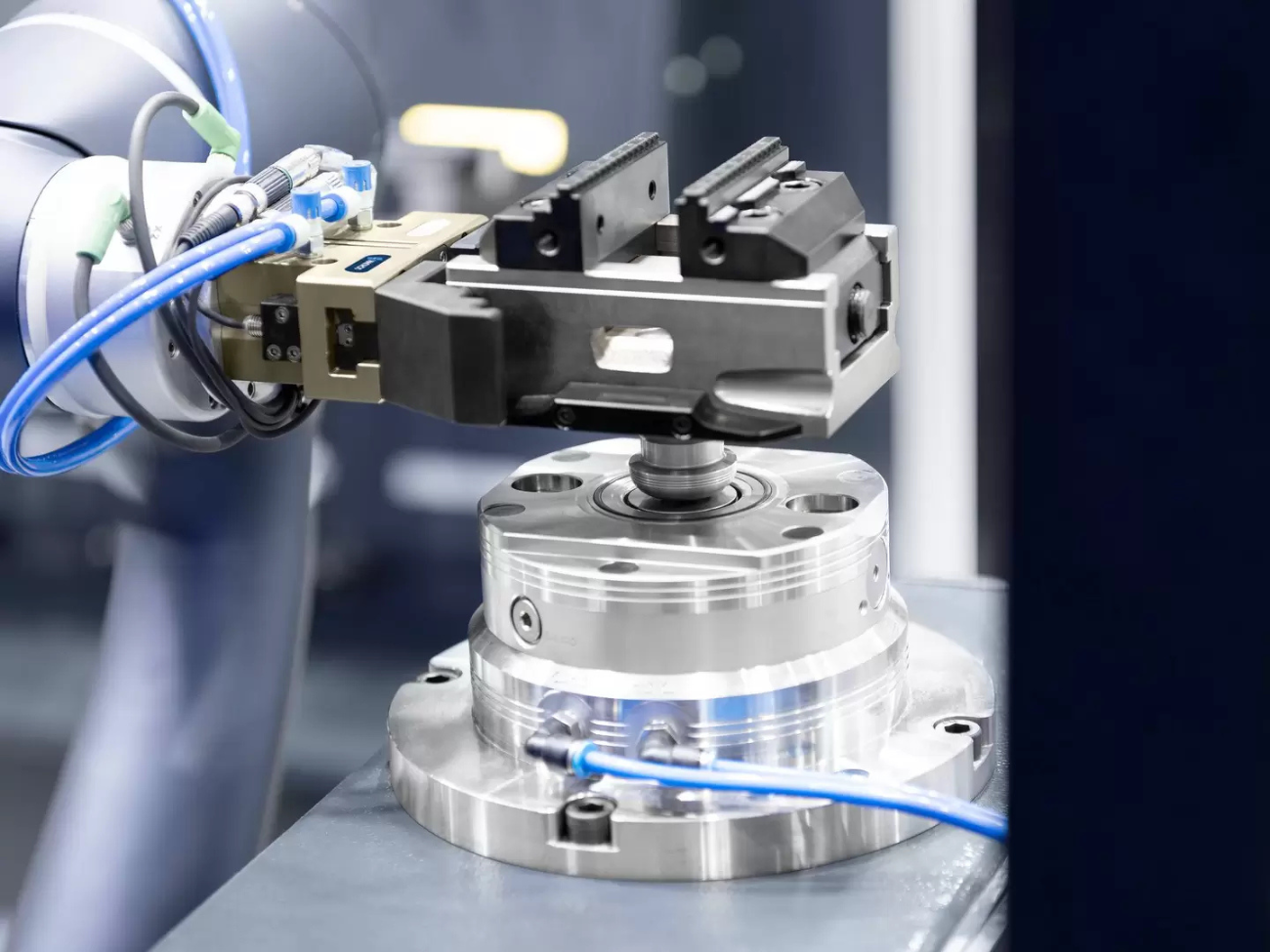
Vise automation is based on a deliberately simple concept: workpieces are manually clamped into specially prepared vises outside the machine and then loaded into a storage rack. A robot equipped with special gripping fingers picks up the loaded vises and positions them precisely on a raised VERO-S 1-way clamping station on the machine table of the machine tool. After machining, it returns them, along with the workpiece, to the storage rack. Re-clamping for machining the underside of the workpiece can take place both outside and inside the storage rack.
At the heart of the vise automation system is the VERO-S clamping station as a console version. It serves as the interface between the robot and the machine tool, and enables high-precision positioning and clamping of the vises in a single operation. Thanks to the high pull-down forces and the micrometer-precise interface of the quick-change pallet system, the robot consistently picks up and changes the clamping devices with repeat accuracy. The raised console version provides optimal accessibility for machining five sides of the workpiece. At the same time, the quick-change pallet module is completely covered by the clamping device. This prevents chip buildup and ensures consistently high process reliability. Depending on the machine type, the console version can be operated either via the machine or via the robot.
The critical clamping process remains under the operator’s control. The robot is responsible solely for the reliable handling of the complete vise. Since it always uses the same defined interface and moves to fixed positions, programming is reduced to simple point-to-point movements. This significantly reduces the complexity of automation and makes it easier to integrate into existing manufacturing systems. Since no media feed is required on the machine side, the automation system can be used flexibly with virtually any type of machine.
Longer machine running time, lower investment
Vise automation can significantly extend machine running times. Before the end of their shift, machine operators can prepare several loaded vises in the storage rack. The machine will then continue to operate autonomously even after work hours. This allows companies to increase their productivity without having to employ additional staff.
At the same time, they benefit from a comparatively low capital expenditure. The entire system consists of standardized components and, thanks to its clearly defined interfaces, is easy to program and operates reliably. The combination of low complexity, high process reliability, and cost-effective implementation makes vise automation an attractive entry point into automated machine tending.