

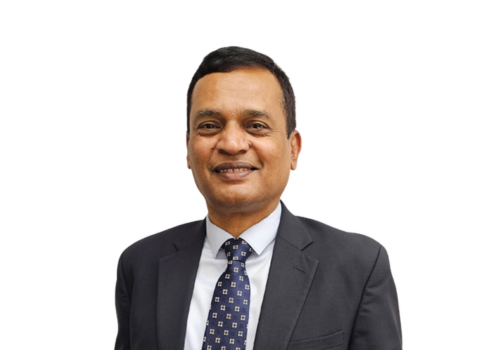
“Participation in past DMI exhibitions has significantly contributed to strengthening collaboration, technology adoption, and industry advancement within the Die and Mould ecosystem. For Makino, these exhibitions have consistently served as a high-value platform to demonstrate technical capabilities, engage with decision-makers, and deepen relationships across the tooling value chain,” says Raghav T V Badhya, President, Makino India, in an interview for DMI 2026.
What key trends, challenges, or growth opportunities do you see in the Indian die and mould industry today, and how might they evolve by 2026?
Globally, the die and mould industries are seeing a clear shift toward larger, more complex moulds, tighter tolerances, and significantly reduced lead times. Indian toolrooms are increasingly encountering similar requirements, particularly from automotive, EV, and industrial customers. Increased Imports of machine tools, especiallywith multi-axis machining centers and advanced EDM systems, gaining share—evidence that mould makers are investing in 5-axis finishing, high-speed spindles, and nano‑finish EDM to achieve global standards.
While challenges such as skill availability, cost pressures, and technology investment remain, the growth opportunity lies in upgrading capabilities for large-sized moulds, high-precision machining, and high-speed manufacturing. By 2026, toolmakers who adopt global standards in accuracy, rigidity, and process control will be better positioned to serve both domestic and international markets. Standardization across SME toolrooms and financing for high-end equipment; PMI/IIP volatility signals competitive pricing pressure and the need for automation to stabilize throughput.
TAGMA’s recent industry communiques estimate that ~34% of India’s tooling market demand is met through imports—a gap that the industry is actively trying to close via capacity, precision upgrades, and supply chain localization by 2026.
Which sectors (e.g., Automotive, EVs, Aerospace, Medical, Defence, etc.) are driving demand for Dies and Moulds, and what opportunities do they present for the industry?
Key demand is coming from sectors that require large and high-precision tooling, including:
– Automotive and EVs, especially for exterior panels, battery housings, and structural components.
– Appliances and consumer durables, which require large moulds with excellent surface finish.
– Industrial equipment Packaging, consumer appliances, jewellery, and EMS: Fast-moving sectors seek high-throughput moulds with accuracy and repeatability at scale with advanced steels and coatings to extend life and reduce maintenance.
– Aerospace: Flight-critical composites and precision metal parts increase the need for high-accuracy jigs, fixtures, and die sets; Precision tooling with process stability is emerging for rapid iterations.
– Electronics & Semiconductor: Government targets $300B electronics output by FY26; chip packaging and EMS clusters in Karnataka, Tamil Nadu, and Gujarat) require precision moulds for connectors, enclosures, and optoelectronic modules.
– Medical devices: India is scaling exports of medical moulds; leading tool Makers already export ~60% of medical tooling, opportunity in multi-cavity, hot-runner designs with high-quality systems.
These sectors are pushing the industry toward larger mould sizes, higher cutting speeds, and consistent precision. Increasing demands for tight‑tolerance products are driving complex injection moulds and die‑casting tools, creating opportunities for advanced machining solutions.
How is India’s manufacturing push (e.g., Make in India, China+1) impacting the die and mould sector overall?
India’s manufacturing push—driven by initiatives such as Make in India, Aatmanirbhar Bharat, and the accelerating China+1 strategy—is significantly reshaping the die and mold (DM) sector. The country is rapidly emerging as a preferred global manufacturing and tooling destination, with OEMs increasingly seeking India-based partners capable of delivering large, complex, and high-precision molds.
Government policies encouraging domestic sourcing, import substitution, and capital investment have led to a notable rise in the adoption of advanced machining technologies, automation, and digital manufacturing practices. As a result, Indian tool rooms today are not only scaling capacity but also improving capability—moving toward global benchmarks in accuracy, lead time, and cost competitiveness.
For over 30 years, Makino India has played a pivotal role in transforming the Indian die and mold industry. Through sustained technology leadership in high-speed machining, EDM solutions, process optimization, and application engineering, Makino has helped elevate the industry’s precision and productivity standards. Many of India’s leading toolmakers credit their global competitiveness to Makino’s machines, engineering expertise, and long-term partnership approach. Because of Makino’s consistent performance and deep understanding of the DM domain, the Indian tooling industry places strong confidence in Makino as a total‑solutions provider—not just a machine builder. Makino has been supporting its customers in:
- Advanced process consultation and feasibility,
- Engineering support for complex mold manufacturing,
- Turnkey machining and automation solutions,
- Precision, reliability, and repeatability are essential for global OEM requirements.
As India continues to strengthen its position in the global value chain, Makino remains at the forefront—supporting toolmakers with the technology, application know-how, and integrated solutions required to meet the growing demand for high-quality, locally manufactured molds.
What innovations or technologies (e.g., additive manufacturing, AI, simulations) are shaping the competitiveness of the die and mould industry?
The competitiveness of the die and mould (DM) industry today is being reshaped by advancements in machining technology, digital engineering, automation, and additive manufacturing. Toolmakers are increasingly adopting solutions that enable faster machining, higher accuracy, and improved first‑time‑right outcomes—especially for large, complex molds used in automotive, packaging, and industrial applications.
1. Innovations in Advanced High‑Speed and Large‑Mould Machining Technologies
Competitiveness is strongly driven by the capability to machine large components with high precision and productivity. Key innovations by Makino include:
- High-speed machining centers designed with superior rigidity, thermal stability, and vibration control.
- Large mold machining platforms capable of handling complex surfaces for automotive and industrial molds.
- High-performance CNC control systems that maintain accuracy at elevated feed rates and during long machining cycles.
- Automation-ready machining and EDM cells that enhance throughput, consistency, and labor efficiency.
- Integrated High‑Speed 5‑Axis Machining and EDM Automation.
Makino’s global expertise in delivering high-speed, five-axis, and large‑mould machining solutions positions us strongly to support Indian toolmakers in elevating their capabilities and achieving global quality standards.
Other technologies that have made inroads in the Indian DM industries are,
2. Additive Manufacturing for Conformal Cooling and Insert Optimization.
3. AI-Driven Parameter Optimization and Digital Simulation.
Digital engineering tools are increasingly used to achieve first-time‑right mold performance.
- Mould‑flow and thermal simulations
- AI‑assisted programing and parameter tuning.
- IoT monitoring and adaptive control to ensure quality traceability and real-time process optimization.
These solutions help toolmakers to maximize spindle utilization, shorten lead times, and improve repeatability.
What role do initiatives like precision manufacturing and talent development play in expanding the die and mould industry into new markets?
Precision manufacturing and talent development are fundamental enablers for the die and mold (DM) industry as it expands into high-value global markets. Sectors such as Electronics, medical, semiconductor, aerospace, EV, and high-precision packaging demand exceptionally tight tolerances, advanced machining expertise, and a workforce trained in digital and high-speed manufacturing technologies.
Talent Development as a Strategic Competitiveness Driver: A skilled workforce is essential to extract the full potential of advanced machine tools, CAD/CAM programming, automation, and precision process control. Talent readiness directly influences lead time, quality, and the ability to serve demanding export markets.
Government of India’s initiative, Skill India Mission, with many other corporate OEMs giving prominence to upskill their workforce, is playing a pivotal role in strengthening this ecosystem:
Structured programs alike are cultivating the next generation of toolmakers equipped for Industry 4.0 environments.
Makino’s Contribution to Upskilling the Tooling Workforce:
Makino India has made long-term, consistent investments in capability-building for the Indian toolmaking community.
- Makino Technology Training Center (MTTC) has been delivering 50+ professionally trained diploma students by giving comprehensive training in CAD/CAM, CNC programming, application engineering, precision cutting, and EDM optimization.
- Makino’s application engineering team supports industry adoption of high-speed machining, graphite and copper electrode optimization, and large‑mould process engineering—critical for competing in global markets.
- Continuous knowledge‑transfer programs, and machining trials at the 4 tech centers across India, and customer workshops enable toolmakers to achieve higher productivity and accuracy from advanced machining systems.
These efforts directly strengthen the industry’s talent pipeline, enabling Indian toolrooms to confidently execute complex, export-grade moulds.
How has participating in past DMI exhibitions contributed to growth, networking, or collaborations within the tooling ecosystem?
Participation in past DMI exhibitions has significantly contributed to strengthening collaboration, technology adoption, and industry advancement within the Die and Mould ecosystem. For Makino, these exhibitions have consistently served as a high-value platform to demonstrate technical capabilities, engage with decision-makers, and deepen relationships across the tooling value chain.
Participating in DMI exhibitions has been a Catalyst for New Collaborations and Ecosystem Development. These exhibitions also offer opportunities for collaboration with CAD/CAM partners, metrology providers, and consumable / tooling specialists—helping Makino present integrated manufacturing solutions rather than standalone machines. Such ecosystem collaborations have strengthened Makino’s ability to support customers with end‑to‑end process readiness.
DMI events provide early insight into upcoming market trends—such as 5-axis machining expansion, digital quality assurance, and sustainability in mould manufacturing with high precision. This visibility helps Makino continuously fine-tune its training, application support, and technology roadmap for the Indian market.
DMI exhibitions have consistently provided a strong platform for technical discussions and technology adoption within the die and mould industry. For Makino, past participations have enabled deeper engagement with customers working on large moulds and complex applications, leading to long-term partnerships rather than transactional interactions.
Additionally, participating in DMI helps in:
- Strong Growth and Brand Leadership in India, especially Western India.
- Engagement With Niche, High‑Precision Toolmakers.
- Strong Platform for Technical Collaboration and Knowledge Exchange.
What makes DMI 2026 a valuable platform for the Die and Mould industry to showcase its strengths to domestic or global customers?
DMI 2026 represents a pivotal moment for India’s Die and Mould industry, and Makino views this platform as a showcase of the nation’s rising technological confidence. As the industry transitions toward larger, more complex moulds, tighter micron-level accuracy, and accelerated manufacturing cycles, DMI becomes a stage where true capability, not just capacity, is demonstrated.
- A Platform to Demonstrate Evolving Capabilities.
- Enabling Toolmakers to Scale for Future Demand.
- Ideal Platform for Makino’s Next-Generation Solutions.
For Makino, DMI 2026 is more than an exhibition. It is a space to reaffirm our longstanding commitment to elevating India’s tooling ecosystem with solutions that combine precision, reliability, and engineering excellence. With over three decades of partnership with Indian toolmakers, Makino will use this platform to introduce next-generation machining, EDM, Automation, and Digital Manufacturing Technologies built to meet the exacting global OEM standards.
DMI 2026 allows Makino to engage with customers in the most meaningful way through application-driven demonstrations, engineering consultations, and real-world machining insights. It strengthens our collaboration with toolmakers striving to scale their capabilities for international markets and underscores our role as a trusted partner in India’s journey toward global die and mould leadership. In essence, DMI 2026 is where precision meets purpose—and where Makino showcases the future of Die and Mould manufacturing, engineered for India and benchmarked for the world.
What products, technologies, or launches are you planning to showcase at DMI 2026, and why are they significant for the industry? (Please share the description of the product and share the product image.)
At TAGMA DMI 2026, Makino India will unveil a new high-generation speed machining centre engineered specifically for high-precision Die and Mould making. The focus will be on:
Key Technologies and Product Showcases at DMI 2026
1. New High‑Speed Machining Centre for Precision Die & Mould Applications
Makino will introduce an all-new high-speed, 3-axis machining center purpose-built for complex Die and Mould geometries. Designed to deliver superior precision, surface finish, and cycle‑time efficiency, this platform brings Makino’s global engineering excellence to the Indian market.
2. Large‑Format 5‑Axis Machining Centers
In response to growing demand for large automotive plastic, lighting, and exterior moulds, Makino will introduce state-of-the-art advanced 5-axis solutions.
3. High‑Precision, High‑Speed Vertical Machining Solutions
Makino will present next-generation machining centers optimized for Premium surface finish, with Micron-level accuracy, and shorter finishing cycles, with consistent performance across long machining hours. These solutions are ideal for multi-cavity precision moulds, medical tooling, and high‑finish packaging applications.
4. Large and High-Precision Wire and Sinker EDM machines with an automation interface
Responding to rising demand in plastic dies, high-speed stamping tools, and progressive dies, Makino will showcase advanced EDM solutions featuring:
Superior straightness and positional accuracy, thermally stable construction for long burns, Graphite/copper electrode optimization, and automation-ready designs for 24/7 precision machining. These platforms are engineered to deliver accuracy, consistency, and lower cost per electrode or burn cycle.
5. Next‑Generation Machine Design Enhancements
Across all showcased machines, Makino’s advancements include improved structural rigidity for complex steel cutting, enhanced thermal management systems, and process consistency features for first-time right machining. These improvements directly support Indian toolrooms in achieving global benchmarks for quality and lead time.
The technologies showcased at DMI 2026 demonstrate Makino’s strategic commitment to empowering India’s die and mould sector with cutting-edge global advancements. With focus areas spanning large‑mould machining, high-speed precision finishing, and EDM excellence, Makino is enabling Indian toolmakers to confidently manufacture large, complex, and high-accuracy moulds that meet international standards.
Makino’s presence at DMI 2026 reinforces its role as a technology leader and trusted long-term partner in the growth and globalization of India’s tooling industry.

COMMENTS