

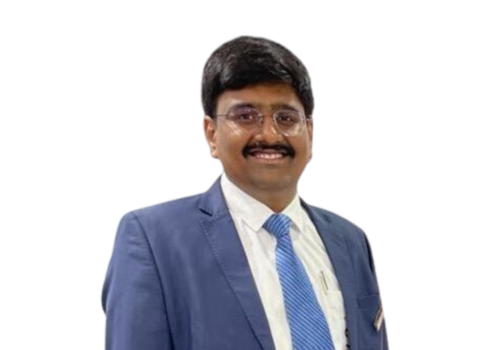
“DMI 2026 is the definitive stage for Atmanirbhar Bharat. By leveraging this opportunity, we are demonstrating that “German Precision” is now deeply rooted in Indian manufacturing. By showcasing advanced digitalization and reliable engineering, we prove that the Indian tooling ecosystem can meet international standards. It’s our moment to transition from being a cost-effective destination to a global hub for high-reliability manufacturing,” says Ramakrishna EDARA, CEO & Director, FIBRO India., in an interview for DMI 2026.
What key trends, challenges, or growth opportunities do you see in the Indian die and mould industry today, and how might they evolve by 2026?
The industry is moving from ‘built-to-print’ to ‘engineered-in-India’. The core opportunity lies in the shift toward high-complexity, multi-cavity tooling that demands extreme precision. By 2026, the differentiator will be the localization of high-tech subsystems, reducing lead times and dependency on imports. The challenge of rising material costs will be met by smarter, data-driven engineering that maximizes tool life and resource efficiency.
Which sectors (e.g., Automotive, EVs, Aerospace, Medical, Defence etc.) are driving demand for Dies and Moulds, and what opportunities do they present for the industry?
While Automotive remains our anchor, the EV revolution is creating a massive pull for specialized battery housings and high-pressure die casting. Concurrently, the Medical and Electronics sectors are demanding a level of miniaturization that requires sophisticated Hot Runner Technology (HRT) and High-Performance Standard Parts. These high-precision sectors are the primary drivers for Indian toolmakers to adopt global-standard components manufactured right here in India.
How is India’s manufacturing push (e.g., Make in India, China+1) impacting the die and mould sector overall?
India’s manufacturing push, particularly Make in India 3.0, has evolved from simple assembly to a “design-led” value proposition. The Atmanirbhar Bharat mission has shifted India from a secondary base to a primary global powerhouse. For FIBRO India, this has validated our strategy of localizing high-precision products like Cam Units and Gas Springs, ensuring our customers can source “German-standard” parts right here in India. Eliminating foreign dependency, ensuring the Indian tooling industry remains resilient, self-reliant, and globally competitive.
What innovations or technologies (e.g., additive manufacturing, AI, simulations) are shaping the competitiveness of the die and mould industry?
Today’s competitive edge is purely technological. We use AI simulations to stop defects before cutting metal, while Wireless Pressure Monitoring (WPM) ensures zero-downtime for high-speed lines. In moulding, heating is the real game changer. Technologies like BlueFlow® provide the precise thermal control needed to eliminate warping and “short shots.” By keeping the melt temperature identical from nozzle to cavity, we guarantee perfect parts every time, slashed scrap rates, and peak efficiency.
What role do initiatives like precision manufacturing and talent development play in expanding the die and mould industry into new markets?
Technology is only as good as the person operating it. We believe talent development is a strategic asset. Our ‘Pass the Torch’ mentorship programs bridge the gap between traditional engineering wisdom and digital fluency. This focus on talent ensures that our ‘Orange Buddies’ can maintain the zero-defect Standards required for India to capture a larger share of the global export market.
How has participating in past DMI exhibitions contributed to growth, networking, or collaborations within the tooling ecosystem?
DMI has always been more than a trade show; it checks the pulse of the industry. It’s where we have solidified our most critical partnerships and gathered direct feedback that drives our new developments. It is the one place where the entire value chain right from steel suppliers to end-users are available under one roof, allowing for high-level strategic alignment in a matter of days.
What makes DMI 2026 a valuable platform for the die and mould industry to showcase its strengths to domestic or global customers?
DMI 2026 is the definitive stage for Atmanirbhar Bharat. By leveraging this opportunity, we are demonstrating that “German Precision” is now deeply rooted in Indian manufacturing. By showcasing advanced digitalization and reliable engineering, we prove that the Indian tooling ecosystem can meet international standards. It’s our moment to transition from being a cost-effective destination to a global hub for high-reliability manufacturing.
What products, technologies, or launches are you planning to showcase at DMI 2026, and why are they significant for the industry? (Please share the description of the product and share product image.)
We are unveiling “Flow to Form,” a journey into the high precision that drives high-performance manufacturing. At Booth J03, Hall 3, we are launching our localized, Made in India Standard Parts range. By integrating Advanced Hot Runner technology, we transform raw material into perfect geometry, offering a sustainable solution that minimizes waste, optimizes cycle times, and elevates mould efficiency for the Indian die and mould industry.

COMMENTS