

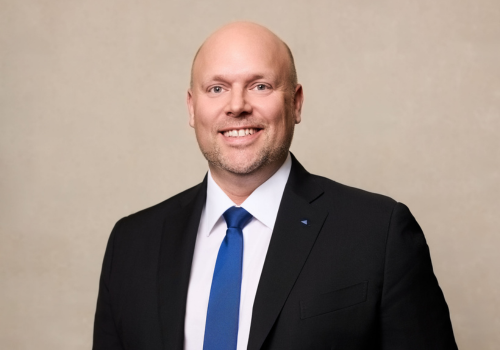
“Participation in past DMI exhibitions has helped companies expand networks, connect with OEMs and global buyers, and explore technology partnerships. DMI 2026 serves as a comprehensive platform to showcase India’s capabilities in precision tooling, innovation, and quality manufacturing to domestic and global stakeholders”, says Thomas Wörndle, CSO, REGO-FIX, Member of the Executive Board. This interview was taken for DMI 2026.
What key trends, challenges, or growth opportunities do you see in the Indian die and mould industry today, and how might they evolve by 2026?
The Indian die and mould industry is experiencing strong growth driven by increased domestic manufacturing, rising exports, and demand for high-precision tooling. Key trends include digitalisation, automation, and the adoption of advanced materials. Challenges remain in terms of skill gaps, high capital investment, and global competition. By 2026, the industry is expected to become more technology-driven, globally competitive, and better integrated into international supply chains.
Which sectors (e.g., automotive, EVs, aerospace, medical) are driving demand for dies and moulds, and what opportunities do they present for the industry?
The automotive and EV sectors are major drivers due to lightweighting, complex geometries, and high-volume production needs. Aerospace and medical devices demand high-precision, tight-tolerance tooling and offer opportunities for innovation, specialsation, and higher-value tooling solutions. The developments in these sectors are already visible and have given REGO-FIX the confirmation to be on the right track.
How is India’s manufacturing push (e.g., Make in India, China+1) impacting the die and mould sector overall?
Government initiatives such as Make in India and the China+1 strategy have significantly boosted local manufacturing and foreign investment. This has increased demand for domestically produced dies and moulds, reduced import dependency, and encouraged global OEMs to source tooling from India.
What innovations or technologies (e.g., additive manufacturing, automation, simulations) are shaping the competitiveness of the die and mould industry?
Technologies such as additive manufacturing, advanced CNC machining, simulation software, digital twins, and Industry 4.0 solutions are transforming the die and mould industry. Automation and smart manufacturing improve accuracy, reduce lead times, and lower costs.
What role do initiatives like precision manufacturing and talent development play in expanding the die and mould industry into new markets?
Precision manufacturing is essential for meeting international quality standards and entering high-value markets. Talent development initiatives and skill training programs are critical to building a future-ready workforce.
How has participating in past DMI exhibitions contributed to growth, networking, or collaborations within the tooling ecosystem?
Participation in past DMI exhibitions has helped companies expand networks, connect with OEMs and global buyers, and explore technology partnerships. This is also the ideal platform for REGO-FIX to generate the right contacts.
What makes DMI 2026 a valuable platform for the die and mould industry to showcase its strengths to domestic or global customers?
DMI 2026 serves as a comprehensive platform to showcase India’s capabilities in precision tooling, innovation, and quality manufacturing to domestic and global stakeholders.
What products, technologies, or launches are you planning to showcase at DMI 2026, and why are they significant for the industry?
REGO-FIX will showcase it‘s new developments towards new tool holding systems and new measuring technology to allow better and more accurate manufacturing processes. We can consult you the latest developments in automation-compatible tool clamping solutions, simulation-supported design processes and innovative materials reflecting future manufacturing demands.