
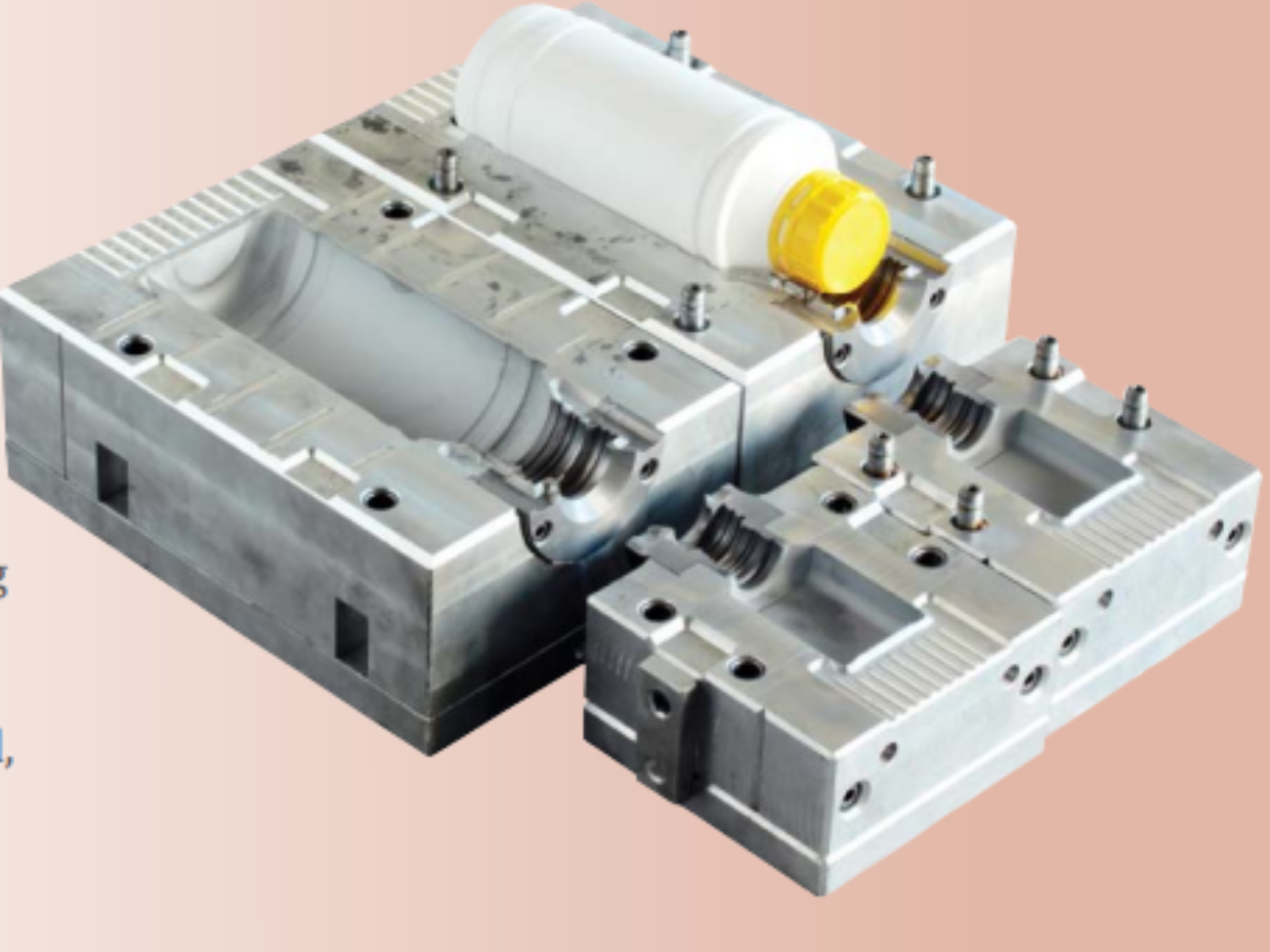
Precision in packaging moulds is often considered a technical achievement rather than a commercial decision. As a result, many tool rooms absorb the hidden costs of tighter tolerances. As packaging moulds become increasingly high-cavitation and globally competitive, sustainable profitability will depend on treating precision as a strategic business asset. The article explores why precision should be planned, priced, and applied only where it adds functional value.
A good seal.” That’s what most packaging consumers ask for. What they mean, in engineering terms, is rarely written down. Between the RFQ and the inspection report, that casual expectation turns into a machined tolerance that quietly eats into the margin no one quoted.
This is the story unfolding in India’s packaging mould sector right now, yet it is rarely discussed in these terms. Most conversations about precision focus on technical achievements such as tighter tolerances, higher surface polish, and fewer rejects. What is often overlooked is the economics: accuracy is not a virtue in packaging moulds, it is a financial decision. Every micron has a cost, regardless of whether it is mentioned in the quotation.
India’s tooling sector is no longer a cottage trade. The packaging industry, along with automotive, is driving more cavitation and tighter control in tool rooms, with a projected market value of INR 18,000–23,600 crore. TAGMA India has closely observed this transition, noting that companies are increasingly serving a global customer base that requires precision and a quick turnaround. The demand is real. However, it comes coupled with a price expectation created by commodity-rate machining, and this mismatch is where tool room profitability gradually erodes.
Industry studies show that companies investing in better tool room precision and simulation achieve measurable benefits, with some reporting up to a 15% reduction in tooling-related failures and a 20% improvement in cooling efficiency, both of which lead to more consistent part quality.
This article explores the root of the problem, why most Indian tool rooms absorb these costs instead of charging for them, and what it takes to transform accuracy from a cost centre into a negotiated value proposition.
Not Every Surface Deserves a Micron
The first mistake happens even before a single toolpath is cut: treating every feature of the mould as equally critical. It isn’t, and this remains one of the biggest sources of unnecessary cost in Indian tool rooms today.
In a packaging mould, precision matters only in certain areas. The sealing surface of a cap or closure determines whether a bottle leaks during transport in 40°C heat. The parting line determines whether flash is merely a cosmetic issue or a functional defect. The neck finish of a PET preform is one of the most critical features in the entire mould.
Manufacturers regularly hold neck finishes within ±0.02 mm across 72-cavity tools because the cap fit is essential to product integrity. Since the neck is fully formed during injection moulding, there is no way to correct it later during the blow moulding process. Thread geometry is equally important. If it is inaccurate, the problem may only be discovered when bottles start getting rejected on a filling line hundreds of kilometres away.
Then there are the less critical features: internal reliefs, non-functional bosses, and cosmetic surfaces that customers will never measure or even notice. Even high-cavitation moulds for beverage and packaging applications are designed to maintain the highest accuracy only in the features that affect part performance, not across every surface of the cavity.
The challenge for Indian tool rooms is that this difference is rarely discussed openly. Inspection practices, long-standing habits, and the fear of customer complaints often push toolmakers to maintain tight tolerances on every feature, believing that uniform precision equals better quality. It doesn’t. It simply adds cost that nobody is willing to pay for. A tool room that can clearly explain, feature by feature, where tight tolerances improve performance and where they add no real value has already found an advantage that many competitors continue to overlook.
The Cost of Precision
Tolerance-related costs do not increase in a straight line, and this is where most commercial negotiations go wrong. Tightening a feature’s tolerance from ±0.05 mm to ±0.02 mm does not require just 60% more effort. It can easily double or even triple the finishing time because machining becomes far more difficult and less predictable in the final few microns.
Finishing passes increase. EDM electrodes that could complete the job in three cycles may now require five or six to maintain the specified accuracy as electrode wear builds up. Inspection also shifts from sample checks to full CMM inspection because even a small temperature variation in the metrology room can affect the measurements. Yet, many tool rooms outside India’s major industrial clusters still operate without climate-controlled environments.
None of this is visible to the customer. They only see a drawing where a tolerance has been tightened by a few hundredths of a millimetre. What the tool room experiences, however, is a sharply rising cost curve that was never reflected in the quotation. As one tool room owner put it, “The customer notices the tolerance change, not the cost multiplier behind it.” Until that multiplier is clearly priced instead of being hidden, every tighter tolerance simply shifts profit from the toolmaker to the customer in the name of better quality.
The Hidden Cost of Scrap
If the cost of tight tolerances is easy to see, the cost of scrap is not, and it is often much higher.
A 0.01 mm variation on a sealing surface does not just cost the value of that 0.01 mm. Its impact spreads through the entire production process. The mould may produce parts with slight flash or minor ovality. These parts can pass visual inspection on the shop floor but fail on a high-speed filling line, where quality requirements are much stricter than what the human eye can detect. By the time the problem is traced back to the mould, it has already wasted resin, energy, machine time, and, more importantly, the customer’s trust. Toolmakers who have seen thousands of parts scrapped because of one small misaligned feature already understand the value of micron-level precision; they have paid for that lesson.
This is also where Indian tool room economics differs from global practices. Industry studies show that companies investing in better tool room precision and simulation achieve measurable benefits, with some reporting up to a 15% reduction in tooling-related failures and a 20% improvement in cooling efficiency, both of which lead to more consistent part quality. However, in many Indian tool rooms, the cost of scrap is addressed only after a problem occurs rather than being prevented through better engineering. A batch fails at the customer’s end, the toolmaker and the customer disagree about the root cause, and the toolmaker often ends up paying through rework, discounts, or damaged business relationships, costs that could have been avoided with the right tolerance strategy from the beginning.
When One Cavity Affects All Cavities of the Moulds
High-cavitation tooling completely changes how precision is valued. As Indian tool rooms transition from 48-cavity to 72-cavity and even 96-cavity packaging moulds, the focus is no longer on the accuracy of a single cavity but on how consistently all cavities perform together over long production runs.
Suppliers working in this range, some of whom are now building 48-cavity to 144-cavity moulds, say the real challenge is not achieving single-cavity perfection but rather building a stable system for high-volume production. This matters because the business case for these moulds is not based on machining cost per cavity but on production uptime and consistency.
In high-cavitation systems, parts are rarely sorted cavity by cavity. This means that if even one cavity goes out of spec, it can affect a large portion of the output, not just a single part. Because of this, leading global suppliers are now focusing on features like self-cleaning systems and mould-to-machine connectivity to reduce variation over extended production cycles, rather than simply achieving accuracy during the first inspection.
For Indian tool rooms moving into higher cavitation moulds to compete on volume, the real challenge has shifted. It is no longer just about achieving micron-level accuracy. It is about maintaining the same accuracy across 96 cavities simultaneously. This is a far more difficult and expensive problem, and in many cases, it is still not properly reflected in quotations.
Why Moulds Lose Precision
A mould that leaves the tool room within perfect tolerance is not the same mould after six months of production. Resin variation, cooling issues, and rough handling all contribute to reduced precision over time. Most plastics facilities in India also lack robust preventive maintenance systems to detect this drift early.
This leads to a clear reality: tool rooms are judged and paid based on the accuracy of a mould at the time of dispatch, but its true value is created during its working life. A mould designed with maintainability in mind, even with slightly relaxed tolerances in non-critical areas, can perform better than a “perfect” mould that wears unevenly because its long term behaviour was never planned. In this sense, precision is not just a machining target; it is also a maintenance responsibility that tool rooms take on but are rarely compensated for.
Upfront Pricing vs Hidden Demands
There is a clear gap between how precision is handled globally and in India. In many global cases, tight tolerances are priced into the quotation from the start, so the customer pays for the required accuracy upfront.
In much of the Indian market, however, the situation is different. Precision is often negotiated at a lower price initially, and stricter tolerance demands are added later, sometimes after the deal has already been closed.
This puts tool rooms under pressure from both sides. They are expected to deliver global-level accuracy, but at pricing meant for standard machining work. This situation worsens when there’s an inverted cost structure, where import duty on finished tools is sometimes lower than the cost of importing raw materials and components to make them locally. As a result, Indian toolmakers are expected to deliver high precision, fast delivery, and reliability together, something that becomes financially unsustainable without proper upfront pricing for precision.
Always Plan Precision before Machining
None of this is an argument against precision. The point is that precision should be planned and priced before any machining begins.
This means clearly deciding, feature by feature, where tight tolerances add value and where they are unnecessary. It means charging for the real cost curve of precision instead of absorbing it. It also means planning tolerance based on preventing scrap, rather than reacting after customer complaints. Most importantly, it means understanding that in a high-cavitation mould, profit depends on consistency across all cavities, not perfection in just one.
Indian tool rooms already have the technical ability to compete globally. The gap is not in machining skill; it is commercial. Precision must be treated as a pricing decision, not as a negotiation loss. Because once machining begins, the economics of the mould have already been decided.