
With a major capacity expansion and a new integrated manufacturing facility, Yudo India explains how local engineering, advanced hot-runner technology and sustainable manufacturing will shape the future of precision injection moulding.

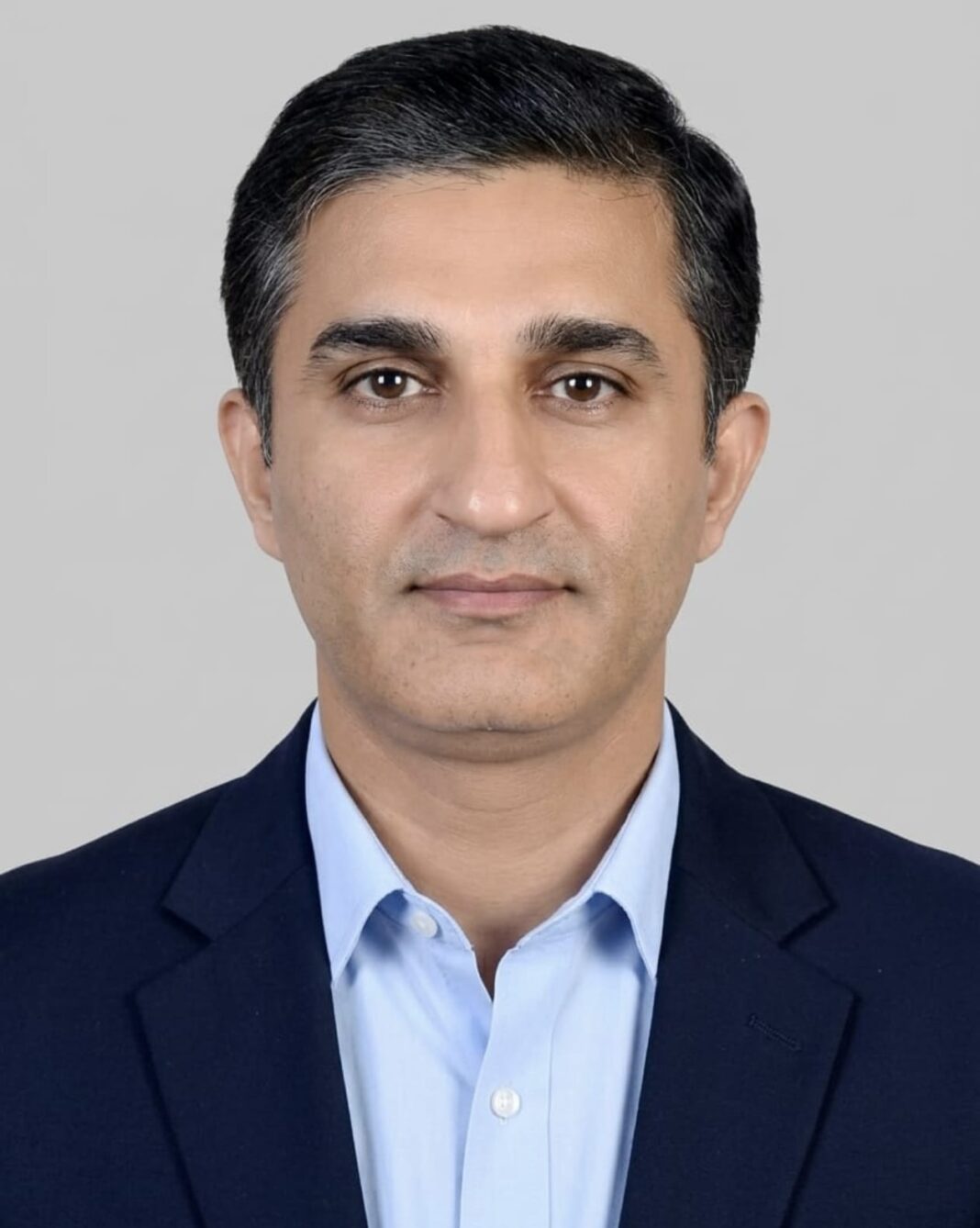
Vishal Agarwal, President,
Yudo Hot Runner India Pvt. Ltd
Q- How significant is the new Vasai plant’s capacity addition in addressing India’s domestic tooling supply constraints?
Domestic demand for precision plastic parts has been rising steadily across automotive, packaging and medical applications. Industry estimates suggest the injection moulded plastics market could reach around US$38 billion by 2030. At the same time, vehicle development cycles have shortened dramatically from two to three years down to a few months, putting pressure on toolmakers and their suppliers to deliver faster.
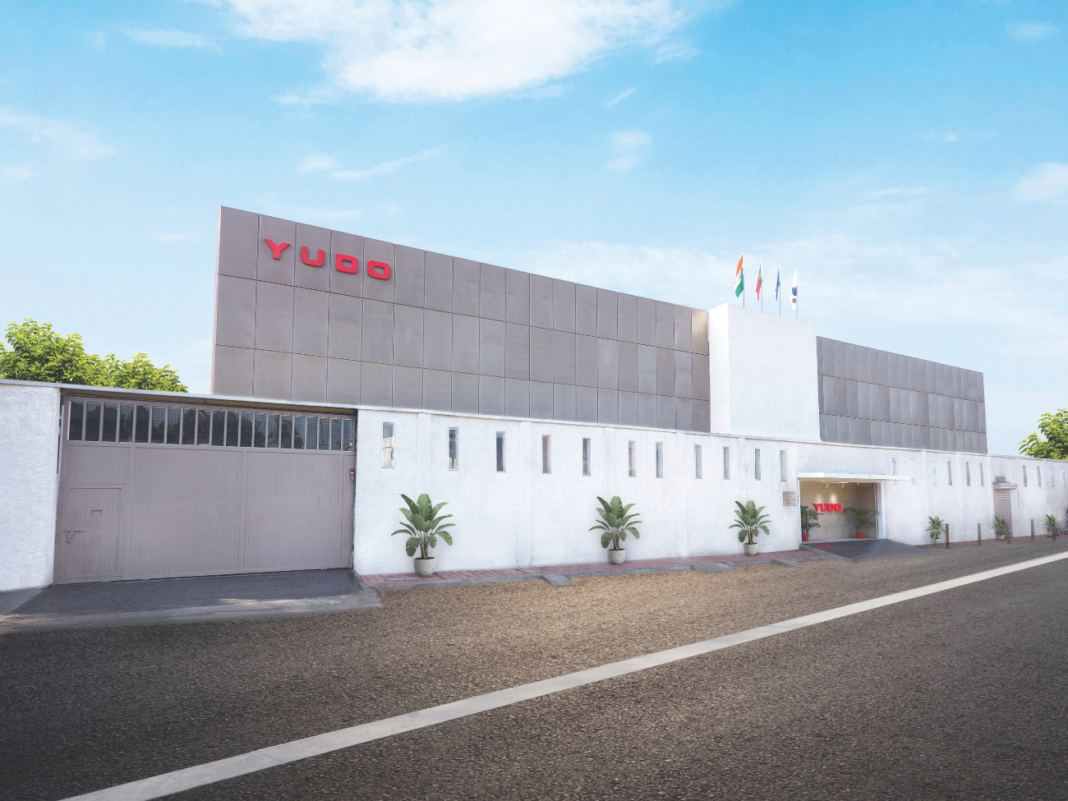
The Vasai facility increases monthly output from roughly 180–190 systems to nearly 400. By housing design, simulation, manufacturing, assembly and testing in one location, it reduces dependence on overseas lead times and allows a larger share of Indian demand to be met from within the country. This is less about expansion for its own sake and more about aligning supply with the pace at which the local industry is now operating.
Q- How does the Vasai plant’s integrated and digital operating model improve project delivery?
When these stages remain in separate locations or with different vendors, information transfer and accountability become fragmented. Keeping the entire sequence in one facility shortens the path from concept to validated system and allows issues identified in testing to feed back into design without delay.
Digitally, the plant runs largely paperless, with ERP connectivity across processes, CAM-based machine programming and AI-supported planning tools. The practical outcome is fewer hand-offs, earlier detection of problems, and a single point of responsibility for the finished system. In a market where delivery reliability matters as much as technical performance, these operational details influence project risk.
Q- What sets Yudo’s India-made solutions apart for Indian moulders?
Our core strength is in-depth knowledge of hot runner systems: how they perform across different industry segments, part geometries and plastic materials. That knowledge gives us control over melt flow through advanced valve-gate systems, precise temperature control using our own heating elements and controllers, and accurate thermal balance across the manifold. What Vasai changes is that this is now engineered and built in India, so the customer gets the same global standard with local design iteration, faster response to changes and support in the same time zone.
With local manufacturing, we are also closer to our customers throughout the production process. This allows us to provide quicker service, faster deliveries, and readily available local spare parts, ensuring better responsiveness and support.
Q- How are changing vehicle designs reshaping hot-runner requirements?
Lightweighting and the shift towards electric vehicles are increasing the use of larger and more complex plastic components, including under-body and battery-related parts that were previously metal. Surface-finish expectations have also risen, often involving pre-coloured materials or in-mould decoration. These applications require tighter control over melt flow, thermal balance and valve-gate performance.
Engineering plastics, glass-filled grades and higher recycled content are becoming more common, all of which are more difficult to process consistently. The result is that hot-runner systems are expected to deliver better runner balance, improved warpage control on large parts, and the ability to handle demanding materials while using less energy. These are industry-wide pressures rather than company specific ones.
Q- How do hot-runner systems help balance quality and cost?
Removing the cold runner eliminates a significant source of material waste on every cycle. More consistent melt delivery reduces reject rates and rework. Improved cycle times, and, in some cases, the required machine tonnage can be lowered, which has a direct impact on capital and operating costs. Energy-efficient hot runner systems and temperature control further reduces power consumption.
None of these outcomes is automatic; they depend on proper system design and process matching. When the technology is applied correctly, however, the same system can reduce scrap, raise consistency and improve productivity at the same time. That combination remains relevant for manufacturers facing both quality audits and margin pressure.
Q- How do packaging, medical and PVC applications differ in their hot-runner requirements?
Each segment has its own constraints. Packaging often prioritises high cavitation, fast cycles and consistent wall thickness on thin-walled parts, which places heavy emphasis on runner balance and rapid colour or material changeovers, gate finish. Medical applications demand very high process stability, clean processing and tight dimensional control, frequently with engineering or high-purity materials. PVC processing, particularly for fittings and pipes, requires careful thermal management because the material is sensitive to temperature variations and can degrade if residence time or hot spots are not controlled.
In all three cases the common thread is that the hot-runner system must be matched more closely to the specific material and part geometry than is typical in general industrial work. Standard solutions are less effective; application-specific thermal design, gate technology and controller capability become more important.
Q- How is collaboration between hot-runner suppliers and mould makers evolving?
The two sides are more interdependent than they sometimes appear. A mould maker’s ability to deliver a reliable, high performance tool increasingly depends on early collaboration with the hot-runner supplier, especially on manifold layout, gate positions, thermal balance and material behaviour. When that dialogue happens late, problems surface only during trials and create costly delays.
Conversely, hot-runner systems perform best when the mould design accounts for their requirements from the start. The practical shift we are seeing is towards joint engineering discussions earlier in the project, shared simulation data, and clearer division of responsibility for the overall process window. This is less about one party controlling the other and more about reducing the friction that still exists between tool design and process technology.
Q- What are the biggest gaps in India’s shift to data-driven toolmaking?
The largest gap is often not the availability of software or machines, but the consistent use of simulation results to drive actual mould and process decisions. Many tool rooms now have access to flow analysis software, yet the outputs are sometimes treated as reference documents rather than as binding design inputs. Another frequent issue is the limited feedback loop between the tool room, the hot runner supplier and the moulder once the tool is in production.
T1’s and moulders can help by providing feedback on thermal conditions of mould and hot runner with single ground results, by participating in design reviews, and by sharing practical guidelines on how specific materials behave with mould and hot-runner systems with reference to their injection moulding machines, auxiliaries & raw material. The aim is not to replace the toolmaker’s expertise but to reduce the number of iterations that still occur between first trials and stable production.
Q- How can injection moulding technology improve sustainability?
Hot-runner systems cut the volume of plastic that is moulded and then discarded as runner waste. Better thermal management lowers electricity consumption during production. The same systems also improve the processability of recycled and bio-based materials and support the production of lighter components that reduce energy use in the end application. High as-moulded surface quality can sometimes eliminate secondary operations such as painting. These are incremental gains rather than complete solutions. They do, however, address three of the most tangible environmental levers available inside the moulding process: material consumption, energy use and secondary finishing.
Q- What is driving localisation of hot-runner systems in India?
Shorter development cycles, rising domestic volume, and policy support for local manufacturing have all increased the cost and risk of relying on long-distance supply. Local engineering support, faster response to design changes, and the ability to test and validate systems inside the country reduce both lead time and logistical uncertainty.
India’s expanding industrial base, engineering talent and improving infrastructure further support this shift. The Vasai investment is one response to those conditions: it prioritises domestic demand while gradually strengthening the country’s capacity to support wider regional or global requirements.
Q- How will tool design and validation evolve in India over the next five years?
We are likely to see greater integration of simulation, additive manufacturing for conformal cooling and complex inserts, and more systematic use of production data to refine subsequent tools. Lead-time pressure will push tool rooms towards parallel rather than sequential workflows, with design, electrode manufacturing, machining and assembly overlapping more than before. The expectation of first-time-right or near-first-time right tools will rise, especially for packaging, medical and high-volume applications, as the industry moves beyond volume growth towards higher-value, higher-precision work like thinner walls, tighter tolerances, more engineering materials and greater recycled content.
Within that shift, technology suppliers will be expected to provide not only hardware but application knowledge, simulation capability and local support that help moulders adopt these more demanding processes without extending development timelines. The tool rooms and partnerships that succeed will be those that treat the mould not as a standalone product but as one element in a complete, data-supported production system, and the suppliers that close the gap between global technical standards and local operating realities will be the ones most relevant to the next phase of growth.
This Interview was published in TAGMA Times Magazine