

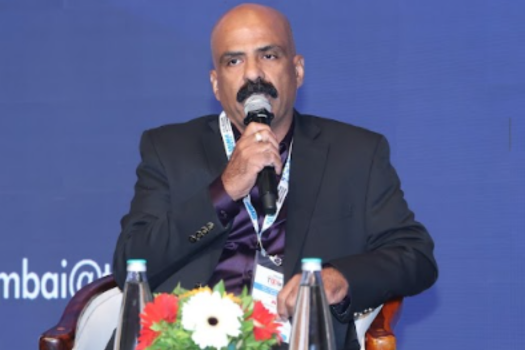
“The truth is, we say we have skills, but the reality is we don’t. There is a massive shortage. No youngsters are coming into this field anymore. Why? Because mould and tool making is a difficult, thankless job. The effort you put in is not always visible in the end product,” says Dominic Savio, GM, Legrand
-By Neha Basudkar Ghate
With the electric vehicle industry growing so rapidly, how well is the Indian tooling sector serving its needs?
To be candid, the service from India’s tooling industry is still not enough for the EV sector. Indian toolmakers are not yet capable of matching the speed that this industry demands. That is why, even today, some OEMs continue to source tools from China not because they want to, but because the local delivery timelines are not sufficient. The need of the hour is speed.
What changes are needed for Indian toolmakers to compete better in this space?
The moment we achieve speed, everything else falls in place. Because in terms of fine‑tuning and finishing, Indian toolmakers are actually better than the Chinese. Once a tool is completed, the detailing and finishing quality we deliver is world‑class. We already have the technology, and we do have the quality. The missing piece is delivery time. If we can match global benchmarks on speed, nobody can beat India. That is the single biggest factor that will change the game for us in the EV‑driven world
What is the current challenge in terms of mould life in the industry?
Today, one of the big expectations is mould life. Normally, we expect a mould to last around 4 million shots. But in practice, many tools are failing much earlier around 2 to 2.5 million shots. After that, additional investments are required to repair or rebuild before they can last the full cycle. This gap between expectation and reality is a key challenge.
What needs to be done to increase the life of moulds?
To increase mould life, it’s not just about the material it requires better collaboration across the ecosystem. Tool makers have to work closely with standard component suppliers, as well as focus on building strong skill sets within their teams.
Ultimately, it is the skilled mould maker who makes the biggest difference. Only with skilled labour and precision workmanship can we achieve longer mould life and reduce failures. Investment in both technology and people is critical to consistently reaching that 4‑million‑shot benchmark.
What is the biggest challenge India faces today in building a strong tooling and mould-making workforce?
The truth is, we say we have skills, but the reality is we don’t. There is a massive shortage. No youngsters are coming into this field anymore. Why? Because mould and tool making is a difficult, thankless job. The effort you put in is not always visible in the end product.
Young people today are looking for easy money, comfortable jobs, and air‑conditioned offices therefore naturally, industries like IT attract them. But in tooling, you need to sweat on the shop floor, work near hot machines, and take real risks. That’s not attractive to them.
This is not only India’s problem but in Europe too, young people are not entering these trades. But here in India, the situation is worsening. Tool rooms are shutting down. Earlier, when I joined mould making, I had to clear two entrance tests, including a psychological one, to get admission. Today, institutes call people and still struggle to fill seats. The institute where I trained doesn’t even exist anymore.
The reality is, whether it’s machines or material, we are using the same equipment as China or Korea. But the reason they deliver faster is people they have skilled manpower, we don’t. That is the real bottleneck.
So what needs to be done to solve this skill shortage crisis?
First, the government has to wake up to this as a serious issue. Only now, very recently, has the problem been acknowledged at a wider level. In fact, today everywhere from morning to evening, people are talking about skill set shortages. But talking alone is not enough.
We need structured missions with clear targets. Not just exhibitions, not just promises on paper, but real programs that connect institutes, industry, and government. We should turn events and networks into real platforms for problem‑solving. We must invest in grooming skilled labour – because no matter how advanced the machines are, without skilled people, nothing moves.
If we don’t act, it will become a disaster in the near future. We have a huge opportunity in front of us, but we are not prepared to seize it. Corrective action has to come now.
With global advances like AI and robotics, how is tool making evolving in India?
Tool making is not the same as it used to be. Many things have changed, and yes, we have copied or adapted a lot from global systems. Technologies like AI are coming into the picture, and in the future perhaps robots may play a bigger role. But as of today, we are not at that level.
Right now, tool making still depends heavily on people on skilled human involvement. Machines can be purchased Indian companies today are rich enough to buy the latest technology, no matter what it costs. But buying technology is not the problem; running it effectively is where the challenge lies. And that demands skilled operators, which we lack.
So is technology enough to solve the problem, or is it more about people and ecosystem maturity?Technology alone is not enough. Even if we have the best machines, without skilled manpower, they cannot deliver value. And here we see another issue — many labourers are not motivated to stay in this field. For example, if someone can earn the same ₹300 a day by working in an air‑conditioned mall, why would they choose to sweat near machines on a shop floor?
At the same time, mould makers themselves are under pricing pressures. OEMs are not paying adequately for the complexity and effort required. If I sell a mould for ₹10 lakhs, my actual margin is very low. That makes it very hard to pay competitive wages and still sustain. Unless there is better recognition of mould makers’ value and more fair margins in business, attracting and retaining skilled manpower will remain a challenge.